


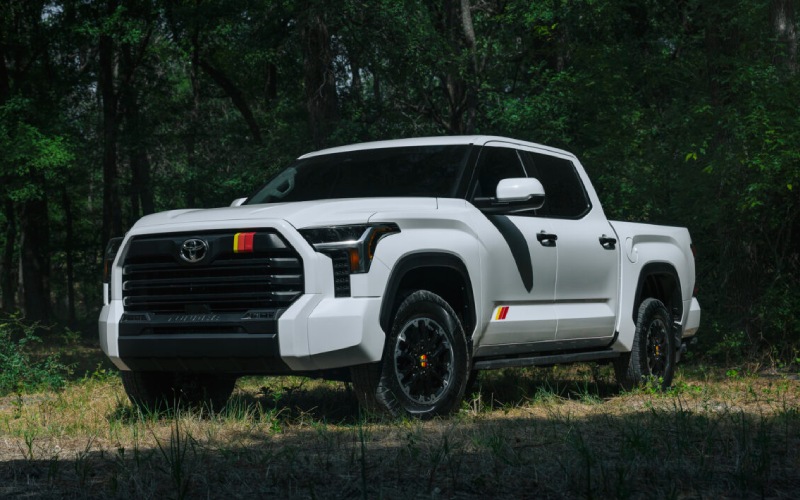
Peterson Toyota – Which truck offers the more confident everyday towing around Parkton, NC — the 2026 Toyota Tundra or the 2026 Ram 1500?
When shoppers around Parkton, NC start comparing full-size pickups, one of the first questions we hear is straightforward: Which truck feels more confident for everyday towing—the Toyota Tundra or the Ram 1500? It’s a great question, because confidence isn’t built on a single spec. It comes from torque right off idle, predictable braking with a trailer attached, clear camera views, and smart software that helps you reverse without the guesswork. Let’s break down how each truck stacks up for real-world towing—think small construction trailers, bass boats at the Lumber River, or a dual-axle utility trailer—so you can make an informed call.
On raw output, Toyota sets a strong foundation with two robust powertrains. The standard i-FORCE twin-turbo V6 delivers 389 hp and 479 lb.-ft. of torque, while the i-FORCE MAX hybrid pairs a twin-turbo V6 with an electric motor to produce 437 hp and 583 lb.-ft. That torque figure matters when you’re pulling away from a stop with 5,000 to 8,000 lbs in tow or merging onto US-301 with a steady uphill grade. Ram 1500 counters with a deep bench: Hurricane engines that can crest 540 horsepower, the available HEMI V8, and the veteran Pentastar V6. Despite that headline horsepower, the Ram 1500’s maximum available towing checks in at 11,610 lbs, while Tundra reaches up to 12,000 lbs. The takeaway is simple: the Toyota’s hybrid torque and tow rating give you a little extra headroom when you need it.
Towing Control You Can Feel
Both trucks bring an Integrated Trailer Brake Controller and tow/haul programming to the table. The difference shows up in how the systems talk to each other. Toyota tuned Tundra’s steering, throttle, and transmission mapping to feel settled with a trailer attached, which you’ll notice at two common stress points—lane changes at highway speed and slow, angled driveways. Tundra’s multi-link rear suspension with coil springs helps the truck track straight, while available load-leveling rear air suspension maintains poise as tongue weight changes.
Ram 1500’s coil-spring rear and available air suspension are also impressive, especially on broken pavement and gravel. Where Toyota pulls ahead is holistic integration: the way the cameras, braking, and steering work together when you’re setting up a trailer in a tight alley or backing toward a ramp. That synergy translates into fewer corrections and more trust in what the truck will do next.
Camera Views and Guidance That Reduce Guesswork
Towing confidence accelerates when you can see what’s happening. Tundra’s available Panoramic View Monitor stitches together a 360-degree perspective, and the Trailer Backup Guide With Straight Path Assist helps keep your trailer aligned while you reverse. For anyone who has had to make three passes at a narrow gate off a two-lane, these tools can be the difference between a quick drop and a twenty-minute hassle. Ram 1500 offers a 360 Surround View Camera and advanced trailering features as well, and they’re welcome additions if you move between multiple hitches and trailers throughout the week.
- Hookups made easier: Multiple camera angles and dynamic grid lines help you center the ball and coupler quickly.
- Backups with fewer corrections: Straight-line guidance supports smoother reversing even in tight spaces.
- Awareness all around: Overhead and side views assist with curbs, posts, and pedestrians near busy lots.
Durability and Bed Utility Matter More Than You Think
Confidence also comes from knowing your gear is protected. Toyota equips every Tundra with an aluminum-reinforced composite bed that resists dents, dings, and rust—no extra liner required. If your routine involves gravel, pavers, or pressure-treated lumber, the bed surface you touch all week should be built to take it. Ram’s rugged steel bed is stout but typically benefits from an added liner for long-term protection. Pickups spend as much time hauling as they do towing; choosing a truck that defends its bed day in and day out is a win for long-term ownership.
For those who alternate between towing and loading, Tundra’s bed-length choices—5.5-, 6.5-, and an 8.1-ft option—let you tailor the truck to your mix of tasks. If you’re hauling ladders for roof work in the morning and hitching a camper in the afternoon, that flexibility keeps your to-do list moving without constant compromises.
Everyday Scenarios Around Parkton, NC
Think about a typical week: weekday commutes, a trailer full of landscaping tools, a Saturday morning run out to a local ramp, a quick supply pickup on the way home. With Tundra, the i-FORCE MAX hybrid’s low-speed torque shortens those moments when you most need confidence—pulling up a wet ramp or finding traction on a gravel shoulder. Its Trailer Backup Guide with Straight Path Assist helps when you’re wedged between a fence and a driveway. And Toyota Safety Sense™ 2.5 standardization offers driver-assist support on every trim, which is great if multiple drivers share the truck.
Ram 1500’s technology and powertrain range are substantial, and if you’re chasing specialized performance or a particular trim vibe, you’ll find compelling options. But for the towing-focused, everyday confidence question, Tundra’s integrated approach—torque-rich hybrid, cohesive tow tuning, and bed durability—answers with fewer tradeoffs.
- Torque where it counts: Hybrid-assisted punch helps with heavy loads at low speed.
- Tow-friendly visibility: Clear camera views simplify hookups and keep you aligned.
- Durability built in: Composite bed resists dents and corrosion without extra accessories.
To make selection easier, consider this quick process when comparing trims and packages for towing:
- List your heaviest regular trailer weight and add 10 percent for headroom.
- Match tow ratings and available axle ratios to that number across trims.
- Prioritize camera and backup-assist packages that fit your driveway and job-site realities.
- Choose a bed length that supports typical cargo without overhanging.
Frequently Asked Questions:
Does Tundra’s i-FORCE MAX hybrid actually improve towing feel at low speeds?
Yes. The electric motor’s instant torque fills in right off idle, which smooths launches on inclines and helps maintain control during precise maneuvers, like easing a boat down a ramp or repositioning a utility trailer.
Can both trucks help me reverse a trailer if I’m not experienced?
Both offer trailer-assist features and 360-degree camera systems. Tundra’s Trailer Backup Guide with Straight Path Assist is particularly intuitive; it actively helps keep the trailer in line so you make fewer steering corrections.
How important is bed material if I tow more than I haul?
Even if towing is your priority, you’ll still load cargo often. A composite bed like Tundra’s reduces long-term wear, protects against rust, and helps avoid the cost and weight of an add-on liner—benefits that show up in daily use and when it’s time to trade.
Ultimately, if your top question is about everyday towing confidence around Parkton, the Toyota recipe resonates: torque-rich hybrid power, towing tech that feels natural, and a bed that’s tough without extra steps. That combination makes the truck easier to live with Monday through Sunday. Peterson Toyota is proud to be serving Maxton, Elizabethtown, and Parkton with straightforward guidance on configuration and features, so you can choose once and tow with certainty.
Request more 2026 Toyota Tundra information
Connect with us

Recent Blog Entries
- Which midsize truck is more versatile for work and weekend trails around Elizabethtown, NC — the 2026 Toyota Tacoma or the 2026 GMC Canyon?
- Which compact sedan is quieter and more comfortable for daily commutes around Parkton, NC — the 2026 Toyota Corolla or the 2026 Mazda3 Sedan?
- Camry vs. Accord – Which midsize sedan offers better all-weather confidence for daily driving around Parkton, NC?
- Which truck offers the more confident everyday towing around Parkton, NC — the 2026 Toyota Tundra or the 2026 Ram 1500?
- Trail-Ready Confidence Around St. Pauls, NC With the 2027 Toyota Land Cruiser’s Full-Time 4WD and SDM