


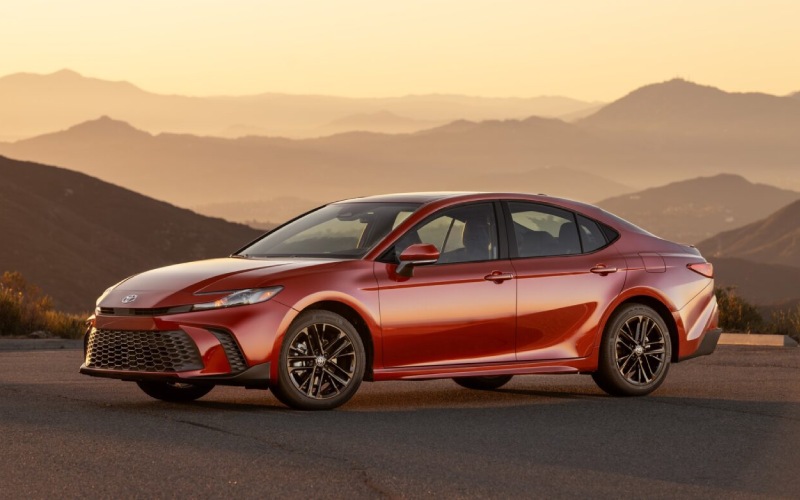
Peterson Toyota – Camry vs. Accord – Which midsize sedan offers better all-weather confidence for daily driving around Parkton, NC?
What drivers mean by all-weather confidence
When shoppers ask about all-weather confidence, they often want two things that make life easier on real roads: traction and consistency. Traction is what helps you pull away smoothly from a slick intersection or steady the car on rutted shoulders. Consistency is how predictably a car reacts when the road changes under the tires. In that light, Camry’s available Electronic On-Demand All-Wheel Drive gives an immediate advantage by routing torque to the rear wheels as needed. The system only wakes up when the front tires slip, which means you keep the easy efficiency of front-drive most of the time and get the stability of AWD when you actually need it.
Accord takes a different approach: it remains front-wheel-drive across the lineup. Honda’s tuning emphasizes poise and quietness, and on dry pavement it is excellent. But because the front tires must handle both turning and propulsion, you’ll feel more tug through the wheel during quick starts and on slippery patches than you would in an AWD Camry. If you frequently leave early for school drop-off, commute through sudden coastal showers, or navigate gravel pull-offs near Parkton, the extra traction of Camry’s available AWD delivers practical, day-to-day assurance without adding complexity to your routine.
Hybrid poise and real-world response
Both sedans leverage electrification, but they do so with different ceilings on output. Camry’s all-hybrid lineup can reach up to 232 net combined horsepower when equipped with AWD, making on-ramps and two-lane passes feel unhurried. The hybrid system’s electric torque fills in smoothly at lower speeds, so you get a confident launch even with a full car. Accord’s hybrid peaks at a still-pleasant 204 horsepower, with strong initial torque and composed cruising. If your driving includes frequent merges onto U.S. 301 or stretches of I-95, the Camry’s added punch makes everyday moves simpler, especially when traffic opens a short window and you want to go now rather than wait.
Another place hybrids distinguish themselves is the brake pedal. Regenerative systems can sometimes feel grabby or inconsistent. Camry’s tuning is notably natural, making it easy to slow gently in neighborhood zones or manage rolling traffic. Accord is similarly refined, but the front-drive layout can add a hint more wheelspin and steering lightness when you’re accelerating out of a tight corner on a damp morning. Neither requires a learning curve; the question is which powertrain delivers the broader comfort zone across your routes. For many, the answer is the Camry hybrid with available AWD.
Cabin tech that reduces effort
All-weather isn’t just about what the tires do. It’s about taking work off the driver in challenging conditions. Camry’s Toyota Safety Sense™ 3.0 includes Lane Tracing Assist and Full-Speed Range Dynamic Radar Cruise Control, and Traffic Jam Assist is available for the grind. An available Head-Up Display projects speed and alerts within your sightline to keep eyes forward. Accord’s Honda Sensing® suite brings similar strengths, including Adaptive Cruise Control with Low-Speed Follow and Lane Keeping Assist System with Traffic Jam Assist, plus a Head-Up Display on its Touring Hybrid trim. Both integrate wireless smartphone compatibility, with Camry’s system emphasizing quick responses and a clean, modern interface that makes everyday tasks feel simple when the weather or traffic gets complicated.
Audio lovers can spec a premium setup in either sedan: JBL® for Camry and Bose for Accord. That might seem like a small win on a spec sheet, but clearer alerts and navigation prompts can matter on noisy, rain-slick commutes. The bigger difference shows up in the available screens. Camry offers a 12.3-in Toyota Audio Multimedia unit and an available 12.3-in Digital Gauge Cluster; Accord’s 12.3-inch touch-screen is standard on hybrid trims and works with Google built-in on Touring. Functionally, both are excellent. The key is how quickly each lets you resume a familiar rhythm when the outside world is less than perfect—here, Camry’s layout feels especially intuitive.
How to choose the right trim the first time
Shoppers weighing traction, output, and cabin tech can zero in fast with a short checklist. Ask yourself where you drive most, how often your schedule demands quick merges, and whether greater traction would reduce stress over the course of a week. If AWD ranks high, Camry’s available Electronic On-Demand AWD answers that need on multiple grades. If you prefer a specific suite of connectivity and a very quiet, front-drive ride, certain Accord hybrid trims will appeal. Both cars are thoughtfully built. The difference is how well each aligns with your routine the other 360 days of the year when you’re not comparing specs.
- List your top three daily driving stress points.
- Decide if AWD would solve one or more of them.
- Test-drive back-to-back on your usual roads, including a few rough patches.
That side-by-side drive tells the story. You will feel the added calm that AWD and a bit more power bring to common maneuvers. If you are leaning toward a sedan that makes life easier across seasons and schedules, the Camry’s formula resonates for a lot of local drivers.
Frequently Asked Questions:
Does the Camry’s available AWD add complexity to maintenance?
The Electronic On-Demand AWD system is engineered to work transparently and requires no special driver input. Maintenance intervals remain straightforward, and service checks are clearly outlined in the owner’s materials.
How do the safety suites compare in day-to-day traffic?
Both suites are comprehensive. Camry’s Toyota Safety Sense™ 3.0 includes features like Lane Tracing Assist and an available Head-Up Display, while Accord’s Honda Sensing® brings Adaptive Cruise Control with Low-Speed Follow and Lane Keeping Assist System with Traffic Jam Assist. In practice, each eases highway and stop-and-go driving.
Can either sedan handle occasional gravel roads or unpaved drives?
Yes, but Camry’s available AWD supplies extra traction to stabilize starts and reduce wheelspin on loose surfaces. Accord’s front-drive layout performs well, yet places more demand on the front tires in these conditions.
Which delivers stronger passing power at highway speeds?
Camry’s all-hybrid lineup can reach up to 232 net combined hp when equipped with AWD, providing more robust passing response than Accord’s 204-hp hybrid.
Peterson Toyota is serving Maxton, Elizabethtown, and Parkton with side-by-side test drives and clear guidance so you can feel the difference in traction, response, and driver assistance on familiar roads. Bring your routine and a few destinations you visit often; we will help you find the sedan that fits your week, not just your wishlist.
Request more 2026 Toyota Camry information
Connect with us

Recent Blog Entries
- Which midsize truck is more versatile for work and weekend trails around Elizabethtown, NC — the 2026 Toyota Tacoma or the 2026 GMC Canyon?
- Which compact sedan is quieter and more comfortable for daily commutes around Parkton, NC — the 2026 Toyota Corolla or the 2026 Mazda3 Sedan?
- Camry vs. Accord – Which midsize sedan offers better all-weather confidence for daily driving around Parkton, NC?
- Which truck offers the more confident everyday towing around Parkton, NC — the 2026 Toyota Tundra or the 2026 Ram 1500?
- Trail-Ready Confidence Around St. Pauls, NC With the 2027 Toyota Land Cruiser’s Full-Time 4WD and SDM