


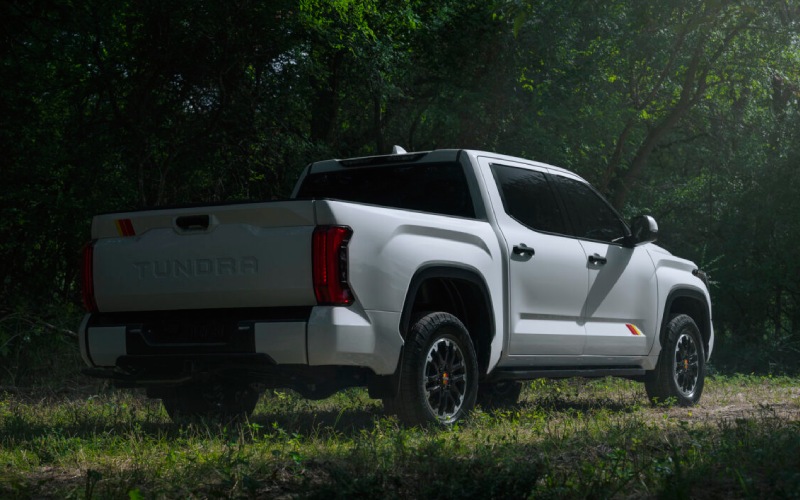
Peterson Toyota – Is the 2026 Toyota Tundra’s composite truck bed better than the 2026 Ford F-150’s aluminum for work around Maxton, NC?
Why this question matters for daily truck life
Bed material affects everything from dent resistance to long-term appearance, which is why many shoppers wonder whether a composite bed like the 2026 Toyota Tundra’s or an aluminum bed like the 2026 Ford F-150’s is the better fit around Maxton, NC. The Tundra uses an aluminum-reinforced composite bed that resists dings and corrosion while staying light and easy to clean. The F-150’s aluminum bed is also light and naturally corrosion-resistant, but it can show dents and creases differently under repeated impact loads. If your routine includes landscaping timbers, masonry, or frequent loading with a skid steer, these nuances add up over the years of ownership.
Beyond materials, consider how the overall truck package supports your work. The Tundra’s multi-link coil-spring rear suspension, standard across the lineup, smooths out patched county roads and helps the truck stay planted with a trailer attached. Its available Panoramic View Monitor and Trailer Backup Guide with Straight Path Assist are helpful when backing into tight alleys off small-town side streets. The F-150 responds with features like its Pro Access Tailgate and an available onboard power system that can be useful on remote worksites. Both are capable, but the way their features integrate into everyday tasks is where differences become clear.
Composite vs. aluminum: what to weigh before you buy
Think about the materials you haul, how you load them, and how frequently the bed takes direct hits from tools or cargo shifts. Composite can shrug off many abrasions that leave visible marks on metal. Aluminum does not rust, which is a plus, but heavier point impacts can leave impressions. Tie-down placement, bed length, and available power outlets should also factor into your decision.
- Impact resistance: Composite bed liners tend to absorb small impacts better, maintaining appearance after repeated loading.
- Corrosion considerations: Both materials resist rust, but the composite avoids galvanic reactions that can affect metal over time in specific conditions.
- Everyday utility: Bed tie-downs, available 120V outlets, and lighting matter just as much as the material itself for after-dark or before-dawn jobs.
How the rest of the truck supports bed durability
Truck beds do not work in isolation. The Tundra’s frame and coil-spring rear suspension help reduce vertical shock to cargo and the bed surface when you hit broken pavement or railroad crossings. That smoother ride can help limit cargo hop, which in turn reduces bed scuffing. Meanwhile, the 2026 Toyota Tundra’s available 8.1-ft bed accommodates long stock without leaving the tailgate down, which helps balance weight over the axle. The F-150’s wide range of configurations makes it easy to tailor cab and bed combos, and drivers who value hands-free highway driving can consider Ford’s available system for long interstate runs.
Technology also plays a role. The Tundra’s available 14-in. Toyota Audio Multimedia touchscreen gives you a crisp view from multiple cameras to position your truck calmly in tight loading zones. Wireless Apple CarPlay and Android Auto help keep the cab organized. Camera and trailer aids continue to get smarter each year, and Toyota Safety Sense™ 2.5 adds a deep bench of driver assists that are valuable on busy routes between job stops. The result is a truck that helps you stay composed, protecting your time—and your bed—by reducing avoidable bumps and scrapes.
Frequently Asked Questions:
Does the Tundra’s composite bed require a separate bed liner?
Most owners don’t find a separate drop-in liner necessary. The Tundra’s composite bed is designed to resist dents and abrasions on its own. If you routinely haul sharp-edged steel or concrete, a rubber mat can add grip and another layer of protection.
How do the Tundra and F-150 compare for towing if bed durability is my priority?
The Tundra’s i-FORCE and i-FORCE MAX powertrains deliver confident torque and up to 12,000 lbs. of max towing when properly equipped, supported by Trailer Backup Guide with Straight Path Assist. The F-150 offers higher peak towing on select configurations. If you tow frequently, the Tundra’s coil-spring stability and integrated trailer tech are easy to appreciate day after day.
Will either bed material corrode in coastal or humid environments?
Aluminum does not rust, and composite doesn’t corrode, so both handle humidity well. The Tundra’s aluminum-reinforced composite bed avoids galvanic corrosion concerns that can affect dissimilar metals in certain conditions, which is reassuring for owners who park outdoors.
If your work or weekend routine around Maxton calls for repeated loading of dense, abrasive materials, the Tundra’s composite bed presents a practical, good-looking long-term solution. When you add in its ride quality, camera-based visibility, and towing confidence, the whole package lines up neatly for contractors, anglers, and weekend builders alike.
Have more questions? Peterson Toyota is here to help, serving Fayetteville, Hope Mills, and Maxton with side-by-side comparisons and test drives that mirror your daily tasks. Bring a list of what you haul, where you drive, and how you load—and we’ll tailor a recommendation that fits.
Request more 2026 Toyota Tundra information
Connect with us

Recent Blog Entries
- Toyota vs Subaru for Active Family SUV Ownership and Weekend Gear Hauling near Fayetteville, NC
- Toyota vs Ford for Hybrid Commuting and Weekend Truck-SUV Utility near Maxton, NC
- Toyota vs Nissan for Low-Stress Daily Driving and Long-Term Ownership in Lumberton, NC
- Toyota vs Honda for Family Commuting and Errand Running near Hope Mills, NC
- Is the 2026 Toyota Corolla or 2026 Hyundai ELANTRA better for safety and tech around Hope Mills, NC?