

tracking pixel
Blog / Toyota Tundra

Is the 2026 Toyota Tundra’s i-FORCE MAX hybrid the right powertrain for towing near Hope Mills, NC?

Is the 2026 Toyota Tundra’s i-FORCE MAX hybrid the right powertrain for towing near Hope Mills, NC?

Peterson Toyota - Is the 2026 Toyota Tundra’s i-FORCE MAX hybrid the right powertrain for towing near Hope Mills, NC?

The i-FORCE MAX hybrid powertrain has quickly become a favorite for truck shoppers who tow regularly and want serious torque without sacrificing refinement. If you are exploring the 2026 Toyota Tundra and wondering how i-FORCE MAX stacks up for hauling campers, boats, and equipment near Hope Mills, NC, this guide breaks down what to expect, how it feels on the road, and which features best support safe, confident trailering.

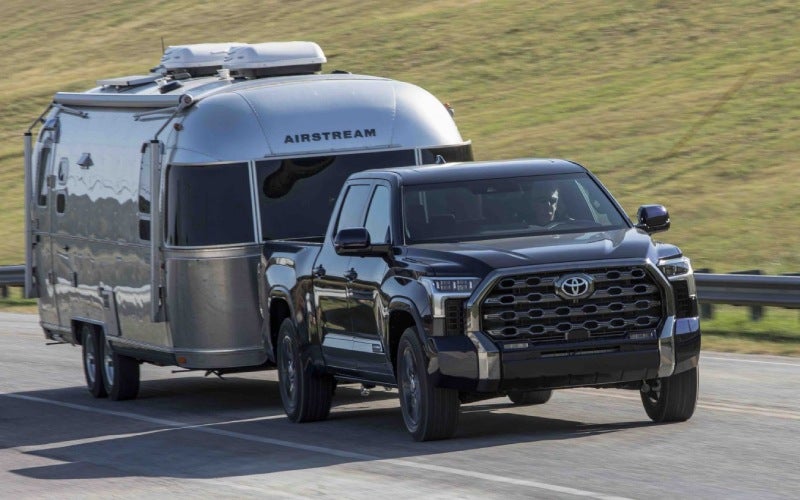
Let’s start with what i-FORCE MAX is designed to do. It pairs a turbocharged gasoline engine with an electric motor to deliver immediate, low-end torque and strong sustained power. That instant torque is especially noticeable when pulling away from a stop with a loaded trailer or when you need to merge decisively onto fast-moving highways. In practice, it feels composed and responsive rather than frantic—exactly what you want when you have a few thousand pounds behind you.

Why the i-FORCE MAX Matters for Real-World Towing

Torque at low rpm is king for towing, and that is where the hybrid system shines. The electric motor’s assistance helps Tundra surge forward smoothly from a standstill, reducing the need for aggressive throttle inputs. On rolling two-lane roads, the powertrain settles into a relaxed rhythm, downshifting less often and maintaining momentum with fewer interruptions. If your tow routine includes highway stretches around I-95 or rolling terrain toward the coast and back, that refined power delivery makes a long day feel shorter.

The hybrid setup also contributes to a calmer cabin. With more torque available early, the transmission does not hunt as frequently, which lowers engine noise and helps keep the truck composed over expansion joints and bridge transitions. Over the course of a multi-hour tow, this steady character can make a surprisingly big difference in driver confidence and reduced fatigue.

Trailering Tech That Complements the Power

Power is only part of the equation. Visibility and control matter just as much. The 2026 Toyota Tundra offers available Panoramic View Monitor (PVM) for a 360-degree, camera-based perspective around the truck—handy when hitching up solo or navigating a tight staging area. Add Trailer Backup Guide with Straight Path Assist and sensors, plus cameras work together to help keep your trailer moving in a straight line as you reverse. These systems are especially helpful at crowded boat ramps or storage lanes where accuracy is crucial.

Pair those technologies with the multi-link rear suspension and coil springs, and you get a truck that feels planted while towing. Stability inspires trust—whether you’re traveling to nearby lakes or heading out for a weekend of trails and camping.

Choosing Between i-FORCE and i-FORCE MAX

The i-FORCE twin-turbo V6 is no slouch; it delivers robust output and confident towing for many owners. If you tow intermittently and value strong performance at a great balance, i-FORCE is an excellent match. If you tow frequently, tackle hilly routes, or want that instant torque without needing to swing to a larger displacement engine, i-FORCE MAX turns every load-in, merge, and uphill stretch into an easier task.

Think about your weekly rhythm: do you tow equipment to job sites multiple days a week, or is it mainly seasonal with occasional weekends away? The more often you tow—and the heavier the loads—the more compelling i-FORCE MAX becomes.

Dialing In the Right Towing Setup

Beyond powertrain choice, consider how you will configure your Tundra. The aluminum-reinforced composite bed is available in 5.5-ft., 6.5-ft., and 8.1-ft. lengths, each resisting dents and rust while offering the utility you need for hitches, gear, and tie-downs. For added control beyond the pavement, the TRD Off-Road Package and TRD Pro bring hardware and tuning to help manage rougher access roads or sandy surfaces where traction matters.

Inside, the available 14-in. Toyota Audio Multimedia touchscreen and 12.3-in. digital gauge cluster keep key trailer and vehicle information front and center. Less time hunting through menus means more time focusing on the road and your surroundings.

Prepping for a Confident Test Drive

If you can, test both i-FORCE and i-FORCE MAX on the same day along a route that includes highway on-ramps, a short stop-and-go section, and a few rougher surfaces to feel the suspension work. Pay attention to how each powertrain responds from a dead stop, how quickly it settles at speed, and how composed it remains over bumps and transitions. If trailering is central to your purchase, hitch a trailer to evaluate how each setup handles the added mass.

  • Match your load: Bring a trailer or gear that reflects your typical weight and distribution to get a true feel for acceleration and braking.
  • Evaluate visibility: Use Panoramic View Monitor to line up hitch and check blind spots around tight corners or lane changes.
  • Practice reversing: Try Trailer Backup Guide with Straight Path Assist in a controlled space to compare steering input and trailer tracking.
  • Monitor data: Explore the 12.3-in. digital gauge cluster for towing-related readouts and how clearly they present at a glance.
  • Note cabin calm: Compare engine noise, shift behavior, and overall smoothness between the two powertrains at different speeds.

These steps transform a routine spin into a meaningful evaluation, helping you choose with confidence.

Local Context and Support

Towing near Hope Mills, with frequent trips toward lakes, job sites, or weekend getaways, puts a premium on torque, camera-based visibility, and stability. The i-FORCE MAX hybrid’s immediate response pairs well with those needs, while Tundra’s available trailering tech simplifies tricky maneuvers when space is tight.

When you are ready to compare builds, Peterson Toyota can arrange side-by-side drives and help you match the right powertrain, bed length, and tech packages. Our dealership is serving Hope Mills, Maxton, and Elizabethtown with guidance that reflects real-world towing conditions, from local highways to uneven access roads.

Bottom Line

If towing is central to your truck’s mission, the 2026 Toyota Tundra with i-FORCE MAX hybrid powertrain is a standout. It combines immediate torque with stability and smart camera-based tools to make heavy loads feel lighter and long hauls feel shorter. Add in a durable composite bed and thoughtful interior tech, and you have a truck built to handle the demands of work and play with equal confidence.

Still deciding? Drive both powertrains back-to-back and bring your normal gear. The right choice often becomes clear the moment you feel how the truck moves with your real-world load.
Request more 2026 Toyota Tundra information

Posted in:

Related Posts

2026toyotatundra-exterior-03

Why the 2026 Toyota Tundra i-FORCE MAX Fits Work and Family Driving Around Hope Mills, NC

Peterson Toyota - Why the 2026 Toyota Tundra i-FORCE MAX Fits Work and Family Driving Around Hope Mills, NC For drivers around Hope Mills, NC, a full-size truck often has to handle more than one role. It may need to tow on the weekend, carry tools during the week, support family errands, and still feel comfortable on the drive toward Fayetteville, Lumberton, or Fort Liberty-area routes. That is where the 2026 Toyota Tundra i-FORCE MAX stands out. Instead of focusing only on traditional truck strength, this available twin-turbo V6 hybrid powertrain adds a smart layer of responsiveness that helps Tundra feel powerful, confident, and modern in daily use. The i-FORCE MAX powertrain produces 437 HP and 583 Lb.-Ft. of torque, giving the 2026 Toyota Tundra serious strength for acceleration, towing, and loaded driving. The hybrid system is designed to add power, not turn the Tundra into a light-duty commuter with limited truck capability. For shoppers comparing full-size pickups, that distinction matters. Tundra i-FORCE MAX is built for drivers who still want the capability expected from a full-size truck, but also appreciate responsive performance and smooth power delivery when merging, passing, or pulling a trailer. Why i-FORCE MAX Matters for Hope Mills Drivers Hope Mills-area roads include neighborhood streets, busy commuter routes, open stretches toward Robeson County, and frequent travel into Fayetteville. A truck that feels sluggish or oversized can make those drives more tiring than necessary. The 2026 Toyota Tundra i-FORCE MAX helps solve that problem with strong low-end torque and confident acceleration. Whether you are moving through stop-and-go traffic, entering a highway, or carrying a full cabin and gear in the bed, the powertrain responds with the kind of authority truck owners appreciate. That responsiveness is also useful for towing. Tundra offers a max towing rating of 12,000 Lbs. when properly equipped, giving shoppers the strength needed for many boats, utility trailers, campers, and work trailers. The i-FORCE MAX powertrain supports that capability with abundant torque, which is especially helpful when getting a trailer moving from a stop or maintaining confidence on changing grades. For a driver near Hope Mills who may tow to a jobsite, a recreation area, or a family property, that power can make the entire experience feel more controlled. Truck Capability With Everyday Comfort Power is only part of the story. The 2026 Toyota Tundra also uses a multi-link rear suspension with coil springs, a design that helps improve ride comfort, handling dynamics, and towing stability. Some full-size trucks can feel stiff or unsettled when the bed is empty, which is often how trucks are driven during everyday errands. Tundra’s suspension design helps create a more composed feel, making it easier to enjoy the truck outside of heavy-duty tasks. For Hope Mills families, that comfort matters. A truck might be used for school drop-offs, grocery runs, youth sports gear, home projects, and longer drives across North Carolina. The Tundra cabin supports those needs with available premium materials, an available 14-in. Toyota Audio Multimedia touchscreen, and an available 12.3-in. digital gauge cluster. These features help bring key information forward, making audio, navigation, towing functions, safety alerts, and vehicle settings easier to manage. Technology That Helps When Towing and Parking One reason many shoppers hesitate to move into a full-size truck is the learning curve that can come with parking, maneuvering, and backing up a trailer. The 2026 Toyota Tundra answers that concern with available driver-assistance technology like Panoramic View Monitor and Trailer Backup Guide With Straight Path Assist. Panoramic View Monitor uses cameras on the front, sides, and rear to provide a 360-degree view of the area around the truck, which can be valuable in parking lots, driveways, and tight jobsite spaces. Trailer Backup Guide With Straight Path Assist is another standout feature because trailer reversing can challenge even experienced drivers. This available system uses sensors and cameras to help keep a trailer in a straight line while backing up. For a Hope Mills driver who only tows occasionally, that extra assistance can reduce stress. For a driver who tows often, it can help make repeated maneuvers more consistent and efficient. i-FORCE MAX output: 437 HP and 583 Lb.-Ft. of torque Maximum towing: Up to 12,000 Lbs. when properly equipped Available towing assist: Trailer Backup Guide With Straight Path Assist Available visibility: Panoramic View Monitor with 360-degree camera views Ride design: Multi-link rear suspension with coil springs How Tundra i-FORCE MAX Compares in the Full-Size Truck Segment The full-size truck market is crowded, and shoppers around Hope Mills may compare Tundra with models from Ford, Chevrolet, GMC, and Ram. Many competitor trucks offer strong engines, but Tundra i-FORCE MAX stands apart by blending twin-turbo performance with hybrid-added power. Some rivals require a larger engine option or a very specific configuration to reach similar confidence. Tundra gives shoppers a smart alternative by delivering strong horsepower and torque through a modern powertrain designed for both work and daily driving. Tundra also stands out with its standard aluminum-reinforced composite bed. The bed is designed to act as a shield against dents, impacts, dings, and rust. That is a meaningful advantage for drivers who load tools, landscaping supplies, sports gear, furniture, or building materials. Traditional steel beds can be tough, but Tundra’s composite bed is built with long-term utility in mind. For many local truck owners, that practical durability can be just as important as horsepower. Which 2026 Toyota Tundra i-FORCE MAX Trim Should You Consider? The 2026 Toyota Tundra lineup includes several i-FORCE MAX choices, giving shoppers flexibility. Limited i-FORCE MAX is a smart place to start for drivers who want the hybrid powertrain with upscale convenience, including the 14-in. Toyota Audio Multimedia touchscreen and leather-trimmed 8-way power-adjustable front seats. Platinum i-FORCE MAX adds a more premium feel with a power tilt/slide panoramic roof and leather-trimmed 10-way power-adjustable front seats. For a more distinctive cabin, 1794 Edition i-FORCE MAX brings chrome-finished exterior accents and a Saddle Tan interior with American walnut wood-grain trim. TRD Pro is the choice for off-road-focused shoppers, adding 18-in. BBS® forged-aluminum wheels with Falken® WILDPEAK All-Terrain tires, TRD Pro off-road suspension with FOX® shocks, and a 1.1-in. front lift. Capstone sits at the top of the lineup with 22-in. chrome- and machined-finish alloy wheels, a 12-speaker JBL® Premium Audio system, and semi-aniline leather-trimmed 10-way power-adjustable front seats. Frequently Asked Questions: Is the 2026 Toyota Tundra i-FORCE MAX a plug-in hybrid? No. The i-FORCE MAX powertrain is a turbocharged hybrid system that combines a gasoline engine with an electric motor for added power. It is designed to enhance performance and capability without requiring plug-in charging. What makes i-FORCE MAX useful for towing? The biggest advantage is torque. With 583 Lb.-Ft. of torque, the 2026 Toyota Tundra i-FORCE MAX offers strong pulling power that can help when launching from a stop, merging with a trailer, or maintaining control with a loaded setup. Does the 2026 Toyota Tundra offer technology to help with trailer backing? Yes. Tundra offers available Trailer Backup Guide With Straight Path Assist. This system uses sensors and cameras to help keep a trailer moving in a straight line while backing up. Can Peterson Toyota help compare Tundra i-FORCE MAX trims? Yes. At Peterson Toyota, we can help you compare Limited i-FORCE MAX, Platinum i-FORCE MAX, 1794 Edition i-FORCE MAX, TRD Pro, Capstone, and other Tundra configurations based on your driving needs, towing plans, comfort preferences, and trade-in goals. Shop the 2026 Toyota Tundra With Peterson Toyota If you live around Hope Mills and want a full-size truck that can handle work, family responsibilities, towing, and everyday comfort, the 2026 Toyota Tundra i-FORCE MAX deserves a close look. Its powertrain strength, durable bed, available towing technology, and refined cabin make it a smart match for drivers who expect more from a pickup. Peterson Toyota in Lumberton is ready to help you browse inventory, value your trade, apply for financing, and schedule a test drive. Our team can walk you through the details so your next truck feels like the right fit from the start. Request more 2026 Toyota Tundra information

2026toyotatundra-exterior-01

Is the 2026 Toyota Tundra's i-FORCE MAX hybrid more practical than the 2026 GMC Sierra 1500's diesel for Parkton, NC truck owners?

Peterson Toyota - Is the 2026 Toyota Tundra's i-FORCE MAX hybrid more practical than the 2026 GMC Sierra 1500's diesel for Parkton, NC truck owners? For many full-size truck shoppers, the powertrain decision is the heart of the comparison. The 2026 Toyota Tundra offers the available i-FORCE MAX twin-turbo V6 hybrid powertrain, while the 2026 GMC Sierra 1500 offers an available Duramax® 3.0L Turbo-Diesel engine. Both are serious choices, and each has clear strengths. The Sierra diesel can deliver a higher maximum diesel towing rating when properly equipped, which will catch the attention of shoppers who regularly pull heavier trailers. The Tundra, however, takes a different approach with hybrid-assisted torque, immediate response, and everyday drivability that feels natural whether you are towing, commuting, or running errands around town. The short answer is that the Tundra’s available i-FORCE MAX hybrid powertrain can be the more practical choice for many Parkton-area truck owners because it combines strong output with convenient gas-powered ownership. It produces 437 horsepower and 583 lb.-ft. of torque, giving the truck impressive low-end strength and confident acceleration. That matters when merging onto a highway, pulling a trailer from a stop, or carrying supplies across Robeson County roads. For shoppers working with Peterson Toyota, the appeal is not only the output; it is the way the Tundra blends power, comfort, bed durability, and Toyota-focused long-term support into one well-rounded package. How the Tundra Hybrid Powertrain Fits Everyday Truck Use The available i-FORCE MAX system is not simply an efficiency-minded add-on. Toyota designed it to add power through a twin-turbo V6 engine and electric motor combination, creating a strong, responsive feel. The benefit is especially noticeable in real-world driving, where instant torque helps the truck get moving smoothly. That can be more useful than peak numbers alone, because most drivers are not towing at maximum capacity every day. More often, a truck is used for hardware runs, family transportation, equipment hauling, boat ramps, utility trailers, and weekend trips. The Sierra 1500’s available Duramax® diesel is an excellent option for drivers who specifically want diesel characteristics, including long-distance towing strength. But diesel ownership may not be the ideal fit for every household. Some shoppers prefer the simplicity of gasoline refueling, the quick response of a hybrid-assisted powertrain, and the ability to enjoy strong torque without stepping into a diesel routine. That is where the Tundra’s available i-FORCE MAX becomes a standout. It gives drivers a modern alternative that feels muscular without asking them to change daily habits. Towing Strength Is About More Than One Rating When comparing trucks, shoppers often start with the highest towing number. That is understandable, but it does not tell the whole story. The Tundra can tow up to 12,000 lbs. when properly equipped, which is more than enough for many campers, boats, utility trailers, and work trailers. Toyota also supports towing confidence with available Trailer Backup Guide With Straight Path Assist, which uses sensors and cameras to help keep a trailer moving in a straight line while backing up. That is a meaningful advantage for drivers who tow occasionally and want added support in tighter spaces. The Sierra 1500 offers available trailering technology as well, including the ProGrade® Trailering System and an in-vehicle trailering app on select models. Those features are useful, and GMC has clearly invested in towing confidence. Still, the Toyota approach feels especially approachable because it pairs strong towing ability with intuitive camera-based help, a comfortable suspension feel, and a standard composite bed that is ready for work from the start. For many buyers, that combination matters more than chasing the highest available rating. Hybrid torque: The available i-FORCE MAX powertrain delivers 583 lb.-ft. of torque for strong launch feel and confident pulling power. Towing support: Available Trailer Backup Guide With Straight Path Assist helps simplify reversing with a trailer attached. Bed durability: The standard aluminum-reinforced composite bed helps resist dents, impacts, dings, and rust. Cabin technology: The available 14-in. Toyota Audio Multimedia touchscreen gives drivers a large, clear command center. Comfort and Control Matter on Local Roads Truck owners serving Elizabethtown, Parkton, and St. Pauls often need a pickup that can move easily between town driving, rural roads, jobsite paths, and longer highway routes. The Tundra’s multi-link rear suspension with coil springs is a key reason it feels composed in different environments. This setup helps with ride comfort and handling stability, particularly when compared with traditional leaf-spring truck suspensions. If you spend as much time driving unloaded as you do towing or hauling, that extra comfort can make a big difference. The Sierra 1500 is comfortable too, especially in higher trims such as Denali and Denali Ultimate, and it offers upscale materials, available Bose audio, and available hands-free driving technology through Super Cruise®. Yet the Tundra counters with a cabin that is practical, modern, and available in a broad range of personalities. Limited, Platinum, 1794 Edition, TRD Pro, and Capstone trims each bring a distinct blend of comfort, utility, or off-road character. That variety helps shoppers choose a truck that matches how it will actually be used. Why the Tundra May Be the Better Ownership Match The Tundra’s strongest advantage is balance. It does not rely on one headline feature to make its case. Instead, it brings together power, smart towing technology, bed toughness, a refined suspension layout, and Toyota Safety Sense™ 2.5. The standard composite bed is especially important because truck beds take daily punishment from tools, cargo, furniture, landscaping supplies, and recreational equipment. GMC offers the CarbonPro® composite bed on select Sierra configurations, but Toyota makes composite-bed strength part of the Tundra’s core identity. There is also value in choosing a truck that feels easy to understand and easy to use. The available Panoramic View Monitor provides a 360-degree look around the truck, helping with parking and maneuvering. The available 12.3-in. digital gauge cluster can display safety, convenience, navigation, audio, off-road, and towing information. The available 14-in. multimedia touchscreen gives the cabin a modern layout without overwhelming the driver. Together, these features make the Tundra feel highly capable but still approachable for daily life. Frequently Asked Questions: Does the Tundra i-FORCE MAX replace the need for a diesel truck? For many drivers, yes. If your towing needs fit within the Tundra’s properly equipped rating and you want strong torque without diesel ownership, the available i-FORCE MAX hybrid powertrain is a practical and powerful alternative. Does the Sierra 1500 tow more than the Tundra? The 2026 GMC Sierra 1500 offers an available maximum diesel towing capacity of up to 13,300 lbs. when properly equipped, while the Tundra can tow up to 12,000 lbs. when properly equipped. The better choice depends on whether you need the highest possible tow rating or a more balanced mix of power, comfort, and convenience. Which truck is better for everyday driving around Parkton, NC? The Tundra is an excellent everyday choice because of its available hybrid power, coil-spring multi-link rear suspension, large available touchscreen, standard composite bed, and driver-assistance technology. It feels strong enough for serious work while remaining comfortable and easy to drive. Is the Tundra good for off-road use? Yes. The Tundra offers the available TRD Off-Road Package and TRD Pro trim. TRD Pro includes features such as BBS® forged-aluminum wheels, Falken® WILDPEAK All-Terrain tires, FOX® shocks, and a front lift, giving adventure-minded drivers a strong factory-backed option. So, is the Tundra’s available i-FORCE MAX hybrid more practical than the Sierra’s available diesel? For shoppers who tow within the Tundra’s capability, want strong acceleration, appreciate a durable standard composite bed, and prefer a gas-hybrid ownership experience, the answer is often yes. The Sierra diesel remains appealing for buyers focused primarily on maximum diesel towing, but the Tundra is easier to recommend as a do-it-all truck for work, errands, recreation, and family use. If your goal is confident power without overcomplicating ownership, the Tundra deserves the first test drive. Request more 2026 Toyota Tundra information

Which truck offers the more confident everyday towing around Parkton, NC — the 2026 Toyota Tundra or the 2026 Ram 1500?

Which truck offers the more confident everyday towing around Parkton, NC — the 2026 Toyota Tundra or the 2026 Ram 1500?

Peterson Toyota - Which truck offers the more confident everyday towing around Parkton, NC — the 2026 Toyota Tundra or the 2026 Ram 1500? When shoppers around Parkton, NC start comparing full-size pickups, one of the first questions we hear is straightforward: Which truck feels more confident for everyday towing—the Toyota Tundra or the Ram 1500? It’s a great question, because confidence isn’t built on a single spec. It comes from torque right off idle, predictable braking with a trailer attached, clear camera views, and smart software that helps you reverse without the guesswork. Let’s break down how each truck stacks up for real-world towing—think small construction trailers, bass boats at the Lumber River, or a dual-axle utility trailer—so you can make an informed call. On raw output, Toyota sets a strong foundation with two robust powertrains. The standard i-FORCE twin-turbo V6 delivers 389 hp and 479 lb.-ft. of torque, while the i-FORCE MAX hybrid pairs a twin-turbo V6 with an electric motor to produce 437 hp and 583 lb.-ft. That torque figure matters when you’re pulling away from a stop with 5,000 to 8,000 lbs in tow or merging onto US-301 with a steady uphill grade. Ram 1500 counters with a deep bench: Hurricane engines that can crest 540 horsepower, the available HEMI V8, and the veteran Pentastar V6. Despite that headline horsepower, the Ram 1500’s maximum available towing checks in at 11,610 lbs, while Tundra reaches up to 12,000 lbs. The takeaway is simple: the Toyota’s hybrid torque and tow rating give you a little extra headroom when you need it. Towing Control You Can Feel Both trucks bring an Integrated Trailer Brake Controller and tow/haul programming to the table. The difference shows up in how the systems talk to each other. Toyota tuned Tundra’s steering, throttle, and transmission mapping to feel settled with a trailer attached, which you’ll notice at two common stress points—lane changes at highway speed and slow, angled driveways. Tundra’s multi-link rear suspension with coil springs helps the truck track straight, while available load-leveling rear air suspension maintains poise as tongue weight changes. Ram 1500’s coil-spring rear and available air suspension are also impressive, especially on broken pavement and gravel. Where Toyota pulls ahead is holistic integration: the way the cameras, braking, and steering work together when you’re setting up a trailer in a tight alley or backing toward a ramp. That synergy translates into fewer corrections and more trust in what the truck will do next. Camera Views and Guidance That Reduce Guesswork Towing confidence accelerates when you can see what’s happening. Tundra’s available Panoramic View Monitor stitches together a 360-degree perspective, and the Trailer Backup Guide With Straight Path Assist helps keep your trailer aligned while you reverse. For anyone who has had to make three passes at a narrow gate off a two-lane, these tools can be the difference between a quick drop and a twenty-minute hassle. Ram 1500 offers a 360 Surround View Camera and advanced trailering features as well, and they’re welcome additions if you move between multiple hitches and trailers throughout the week. Hookups made easier: Multiple camera angles and dynamic grid lines help you center the ball and coupler quickly. Backups with fewer corrections: Straight-line guidance supports smoother reversing even in tight spaces. Awareness all around: Overhead and side views assist with curbs, posts, and pedestrians near busy lots. Durability and Bed Utility Matter More Than You Think Confidence also comes from knowing your gear is protected. Toyota equips every Tundra with an aluminum-reinforced composite bed that resists dents, dings, and rust—no extra liner required. If your routine involves gravel, pavers, or pressure-treated lumber, the bed surface you touch all week should be built to take it. Ram’s rugged steel bed is stout but typically benefits from an added liner for long-term protection. Pickups spend as much time hauling as they do towing; choosing a truck that defends its bed day in and day out is a win for long-term ownership. For those who alternate between towing and loading, Tundra’s bed-length choices—5.5-, 6.5-, and an 8.1-ft option—let you tailor the truck to your mix of tasks. If you’re hauling ladders for roof work in the morning and hitching a camper in the afternoon, that flexibility keeps your to-do list moving without constant compromises. Everyday Scenarios Around Parkton, NC Think about a typical week: weekday commutes, a trailer full of landscaping tools, a Saturday morning run out to a local ramp, a quick supply pickup on the way home. With Tundra, the i-FORCE MAX hybrid’s low-speed torque shortens those moments when you most need confidence—pulling up a wet ramp or finding traction on a gravel shoulder. Its Trailer Backup Guide with Straight Path Assist helps when you’re wedged between a fence and a driveway. And Toyota Safety Sense™ 2.5 standardization offers driver-assist support on every trim, which is great if multiple drivers share the truck. Ram 1500’s technology and powertrain range are substantial, and if you’re chasing specialized performance or a particular trim vibe, you’ll find compelling options. But for the towing-focused, everyday confidence question, Tundra’s integrated approach—torque-rich hybrid, cohesive tow tuning, and bed durability—answers with fewer tradeoffs. Torque where it counts: Hybrid-assisted punch helps with heavy loads at low speed. Tow-friendly visibility: Clear camera views simplify hookups and keep you aligned. Durability built in: Composite bed resists dents and corrosion without extra accessories. To make selection easier, consider this quick process when comparing trims and packages for towing: List your heaviest regular trailer weight and add 10 percent for headroom. Match tow ratings and available axle ratios to that number across trims. Prioritize camera and backup-assist packages that fit your driveway and job-site realities. Choose a bed length that supports typical cargo without overhanging. Frequently Asked Questions: Does Tundra’s i-FORCE MAX hybrid actually improve towing feel at low speeds? Yes. The electric motor’s instant torque fills in right off idle, which smooths launches on inclines and helps maintain control during precise maneuvers, like easing a boat down a ramp or repositioning a utility trailer. Can both trucks help me reverse a trailer if I’m not experienced? Both offer trailer-assist features and 360-degree camera systems. Tundra’s Trailer Backup Guide with Straight Path Assist is particularly intuitive; it actively helps keep the trailer in line so you make fewer steering corrections. How important is bed material if I tow more than I haul? Even if towing is your priority, you’ll still load cargo often. A composite bed like Tundra’s reduces long-term wear, protects against rust, and helps avoid the cost and weight of an add-on liner—benefits that show up in daily use and when it’s time to trade. Ultimately, if your top question is about everyday towing confidence around Parkton, the Toyota recipe resonates: torque-rich hybrid power, towing tech that feels natural, and a bed that’s tough without extra steps. That combination makes the truck easier to live with Monday through Sunday. Peterson Toyota is proud to be serving Maxton, Elizabethtown, and Parkton with straightforward guidance on configuration and features, so you can choose once and tow with certainty. Request more 2026 Toyota Tundra information