

tracking pixel
Blog / Toyota Tundra

Is the 2026 Toyota Tundra's composite truck bed better than the 2026 Ford F-150's aluminum for work around Maxton, NC?

Is the 2026 Toyota Tundra's composite truck bed better than the 2026 Ford F-150's aluminum for work around Maxton, NC?

Peterson Toyota - Is the 2026 Toyota Tundra's composite truck bed better than the 2026 Ford F-150's aluminum for work around Maxton, NC?

Why this question matters for daily truck life

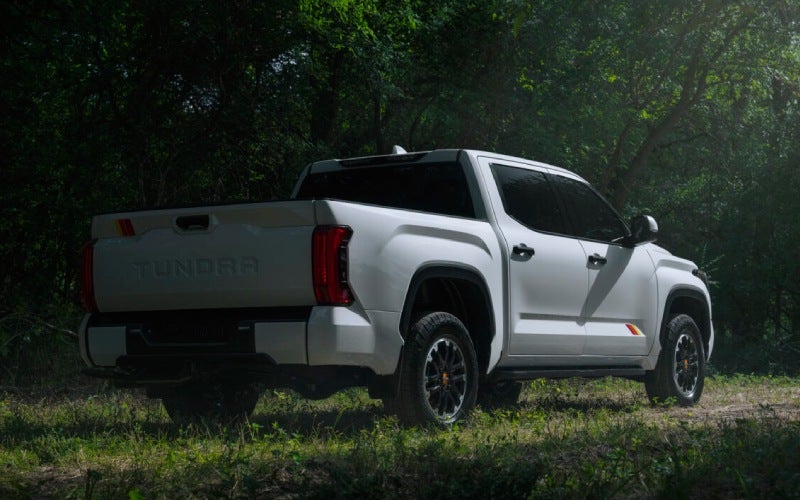
Bed material affects everything from dent resistance to long-term appearance, which is why many shoppers wonder whether a composite bed like the 2026 Toyota Tundra’s or an aluminum bed like the 2026 Ford F-150’s is the better fit around Maxton, NC. The Tundra uses an aluminum-reinforced composite bed that resists dings and corrosion while staying light and easy to clean. The F-150’s aluminum bed is also light and naturally corrosion-resistant, but it can show dents and creases differently under repeated impact loads. If your routine includes landscaping timbers, masonry, or frequent loading with a skid steer, these nuances add up over the years of ownership.

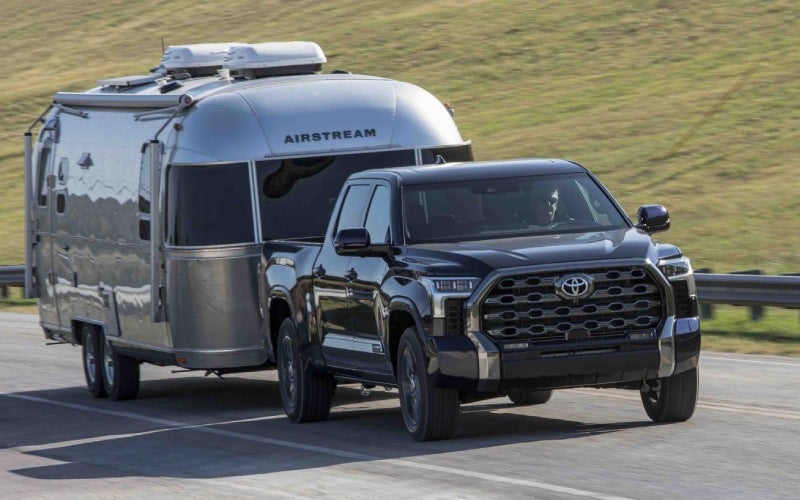
Beyond materials, consider how the overall truck package supports your work. The Tundra’s multi-link coil-spring rear suspension, standard across the lineup, smooths out patched county roads and helps the truck stay planted with a trailer attached. Its available Panoramic View Monitor and Trailer Backup Guide with Straight Path Assist are helpful when backing into tight alleys off small-town side streets. The F-150 responds with features like its Pro Access Tailgate and an available onboard power system that can be useful on remote worksites. Both are capable, but the way their features integrate into everyday tasks is where differences become clear.

Composite vs. aluminum: what to weigh before you buy

Think about the materials you haul, how you load them, and how frequently the bed takes direct hits from tools or cargo shifts. Composite can shrug off many abrasions that leave visible marks on metal. Aluminum does not rust, which is a plus, but heavier point impacts can leave impressions. Tie-down placement, bed length, and available power outlets should also factor into your decision.

  • Impact resistance: Composite bed liners tend to absorb small impacts better, maintaining appearance after repeated loading.
  • Corrosion considerations: Both materials resist rust, but the composite avoids galvanic reactions that can affect metal over time in specific conditions.
  • Everyday utility: Bed tie-downs, available 120V outlets, and lighting matter just as much as the material itself for after-dark or before-dawn jobs.

How the rest of the truck supports bed durability

Truck beds do not work in isolation. The Tundra’s frame and coil-spring rear suspension help reduce vertical shock to cargo and the bed surface when you hit broken pavement or railroad crossings. That smoother ride can help limit cargo hop, which in turn reduces bed scuffing. Meanwhile, the 2026 Toyota Tundra’s available 8.1-ft bed accommodates long stock without leaving the tailgate down, which helps balance weight over the axle. The F-150’s wide range of configurations makes it easy to tailor cab and bed combos, and drivers who value hands-free highway driving can consider Ford’s available system for long interstate runs.

Technology also plays a role. The Tundra’s available 14-in. Toyota Audio Multimedia touchscreen gives you a crisp view from multiple cameras to position your truck calmly in tight loading zones. Wireless Apple CarPlay and Android Auto help keep the cab organized. Camera and trailer aids continue to get smarter each year, and Toyota Safety Sense™ 2.5 adds a deep bench of driver assists that are valuable on busy routes between job stops. The result is a truck that helps you stay composed, protecting your time—and your bed—by reducing avoidable bumps and scrapes.

Frequently Asked Questions:

Does the Tundra’s composite bed require a separate bed liner?

Most owners don’t find a separate drop-in liner necessary. The Tundra’s composite bed is designed to resist dents and abrasions on its own. If you routinely haul sharp-edged steel or concrete, a rubber mat can add grip and another layer of protection.

How do the Tundra and F-150 compare for towing if bed durability is my priority?

The Tundra’s i-FORCE and i-FORCE MAX powertrains deliver confident torque and up to 12,000 lbs. of max towing when properly equipped, supported by Trailer Backup Guide with Straight Path Assist. The F-150 offers higher peak towing on select configurations. If you tow frequently, the Tundra’s coil-spring stability and integrated trailer tech are easy to appreciate day after day.

Will either bed material corrode in coastal or humid environments?

Aluminum does not rust, and composite doesn’t corrode, so both handle humidity well. The Tundra’s aluminum-reinforced composite bed avoids galvanic corrosion concerns that can affect dissimilar metals in certain conditions, which is reassuring for owners who park outdoors.

If your work or weekend routine around Maxton calls for repeated loading of dense, abrasive materials, the Tundra’s composite bed presents a practical, good-looking long-term solution. When you add in its ride quality, camera-based visibility, and towing confidence, the whole package lines up neatly for contractors, anglers, and weekend builders alike.

Have more questions? Peterson Toyota is here to help, serving Fayetteville, Hope Mills, and Maxton with side-by-side comparisons and test drives that mirror your daily tasks. Bring a list of what you haul, where you drive, and how you load—and we’ll tailor a recommendation that fits.
Request more 2026 Toyota Tundra information

Posted in:

Related Posts

2026toyotatundra-exterior-01

Is the 2026 Toyota Tundra's i-FORCE MAX hybrid more practical than the 2026 GMC Sierra 1500's diesel for Parkton, NC truck owners?

Peterson Toyota - Is the 2026 Toyota Tundra's i-FORCE MAX hybrid more practical than the 2026 GMC Sierra 1500's diesel for Parkton, NC truck owners? For many full-size truck shoppers, the powertrain decision is the heart of the comparison. The 2026 Toyota Tundra offers the available i-FORCE MAX twin-turbo V6 hybrid powertrain, while the 2026 GMC Sierra 1500 offers an available Duramax® 3.0L Turbo-Diesel engine. Both are serious choices, and each has clear strengths. The Sierra diesel can deliver a higher maximum diesel towing rating when properly equipped, which will catch the attention of shoppers who regularly pull heavier trailers. The Tundra, however, takes a different approach with hybrid-assisted torque, immediate response, and everyday drivability that feels natural whether you are towing, commuting, or running errands around town. The short answer is that the Tundra’s available i-FORCE MAX hybrid powertrain can be the more practical choice for many Parkton-area truck owners because it combines strong output with convenient gas-powered ownership. It produces 437 horsepower and 583 lb.-ft. of torque, giving the truck impressive low-end strength and confident acceleration. That matters when merging onto a highway, pulling a trailer from a stop, or carrying supplies across Robeson County roads. For shoppers working with Peterson Toyota, the appeal is not only the output; it is the way the Tundra blends power, comfort, bed durability, and Toyota-focused long-term support into one well-rounded package. How the Tundra Hybrid Powertrain Fits Everyday Truck Use The available i-FORCE MAX system is not simply an efficiency-minded add-on. Toyota designed it to add power through a twin-turbo V6 engine and electric motor combination, creating a strong, responsive feel. The benefit is especially noticeable in real-world driving, where instant torque helps the truck get moving smoothly. That can be more useful than peak numbers alone, because most drivers are not towing at maximum capacity every day. More often, a truck is used for hardware runs, family transportation, equipment hauling, boat ramps, utility trailers, and weekend trips. The Sierra 1500’s available Duramax® diesel is an excellent option for drivers who specifically want diesel characteristics, including long-distance towing strength. But diesel ownership may not be the ideal fit for every household. Some shoppers prefer the simplicity of gasoline refueling, the quick response of a hybrid-assisted powertrain, and the ability to enjoy strong torque without stepping into a diesel routine. That is where the Tundra’s available i-FORCE MAX becomes a standout. It gives drivers a modern alternative that feels muscular without asking them to change daily habits. Towing Strength Is About More Than One Rating When comparing trucks, shoppers often start with the highest towing number. That is understandable, but it does not tell the whole story. The Tundra can tow up to 12,000 lbs. when properly equipped, which is more than enough for many campers, boats, utility trailers, and work trailers. Toyota also supports towing confidence with available Trailer Backup Guide With Straight Path Assist, which uses sensors and cameras to help keep a trailer moving in a straight line while backing up. That is a meaningful advantage for drivers who tow occasionally and want added support in tighter spaces. The Sierra 1500 offers available trailering technology as well, including the ProGrade® Trailering System and an in-vehicle trailering app on select models. Those features are useful, and GMC has clearly invested in towing confidence. Still, the Toyota approach feels especially approachable because it pairs strong towing ability with intuitive camera-based help, a comfortable suspension feel, and a standard composite bed that is ready for work from the start. For many buyers, that combination matters more than chasing the highest available rating. Hybrid torque: The available i-FORCE MAX powertrain delivers 583 lb.-ft. of torque for strong launch feel and confident pulling power. Towing support: Available Trailer Backup Guide With Straight Path Assist helps simplify reversing with a trailer attached. Bed durability: The standard aluminum-reinforced composite bed helps resist dents, impacts, dings, and rust. Cabin technology: The available 14-in. Toyota Audio Multimedia touchscreen gives drivers a large, clear command center. Comfort and Control Matter on Local Roads Truck owners serving Elizabethtown, Parkton, and St. Pauls often need a pickup that can move easily between town driving, rural roads, jobsite paths, and longer highway routes. The Tundra’s multi-link rear suspension with coil springs is a key reason it feels composed in different environments. This setup helps with ride comfort and handling stability, particularly when compared with traditional leaf-spring truck suspensions. If you spend as much time driving unloaded as you do towing or hauling, that extra comfort can make a big difference. The Sierra 1500 is comfortable too, especially in higher trims such as Denali and Denali Ultimate, and it offers upscale materials, available Bose audio, and available hands-free driving technology through Super Cruise®. Yet the Tundra counters with a cabin that is practical, modern, and available in a broad range of personalities. Limited, Platinum, 1794 Edition, TRD Pro, and Capstone trims each bring a distinct blend of comfort, utility, or off-road character. That variety helps shoppers choose a truck that matches how it will actually be used. Why the Tundra May Be the Better Ownership Match The Tundra’s strongest advantage is balance. It does not rely on one headline feature to make its case. Instead, it brings together power, smart towing technology, bed toughness, a refined suspension layout, and Toyota Safety Sense™ 2.5. The standard composite bed is especially important because truck beds take daily punishment from tools, cargo, furniture, landscaping supplies, and recreational equipment. GMC offers the CarbonPro® composite bed on select Sierra configurations, but Toyota makes composite-bed strength part of the Tundra’s core identity. There is also value in choosing a truck that feels easy to understand and easy to use. The available Panoramic View Monitor provides a 360-degree look around the truck, helping with parking and maneuvering. The available 12.3-in. digital gauge cluster can display safety, convenience, navigation, audio, off-road, and towing information. The available 14-in. multimedia touchscreen gives the cabin a modern layout without overwhelming the driver. Together, these features make the Tundra feel highly capable but still approachable for daily life. Frequently Asked Questions: Does the Tundra i-FORCE MAX replace the need for a diesel truck? For many drivers, yes. If your towing needs fit within the Tundra’s properly equipped rating and you want strong torque without diesel ownership, the available i-FORCE MAX hybrid powertrain is a practical and powerful alternative. Does the Sierra 1500 tow more than the Tundra? The 2026 GMC Sierra 1500 offers an available maximum diesel towing capacity of up to 13,300 lbs. when properly equipped, while the Tundra can tow up to 12,000 lbs. when properly equipped. The better choice depends on whether you need the highest possible tow rating or a more balanced mix of power, comfort, and convenience. Which truck is better for everyday driving around Parkton, NC? The Tundra is an excellent everyday choice because of its available hybrid power, coil-spring multi-link rear suspension, large available touchscreen, standard composite bed, and driver-assistance technology. It feels strong enough for serious work while remaining comfortable and easy to drive. Is the Tundra good for off-road use? Yes. The Tundra offers the available TRD Off-Road Package and TRD Pro trim. TRD Pro includes features such as BBS® forged-aluminum wheels, Falken® WILDPEAK All-Terrain tires, FOX® shocks, and a front lift, giving adventure-minded drivers a strong factory-backed option. So, is the Tundra’s available i-FORCE MAX hybrid more practical than the Sierra’s available diesel? For shoppers who tow within the Tundra’s capability, want strong acceleration, appreciate a durable standard composite bed, and prefer a gas-hybrid ownership experience, the answer is often yes. The Sierra diesel remains appealing for buyers focused primarily on maximum diesel towing, but the Tundra is easier to recommend as a do-it-all truck for work, errands, recreation, and family use. If your goal is confident power without overcomplicating ownership, the Tundra deserves the first test drive. Request more 2026 Toyota Tundra information

Which truck offers the more confident everyday towing around Parkton, NC — the 2026 Toyota Tundra or the 2026 Ram 1500?

Which truck offers the more confident everyday towing around Parkton, NC — the 2026 Toyota Tundra or the 2026 Ram 1500?

Peterson Toyota - Which truck offers the more confident everyday towing around Parkton, NC — the 2026 Toyota Tundra or the 2026 Ram 1500? When shoppers around Parkton, NC start comparing full-size pickups, one of the first questions we hear is straightforward: Which truck feels more confident for everyday towing—the Toyota Tundra or the Ram 1500? It’s a great question, because confidence isn’t built on a single spec. It comes from torque right off idle, predictable braking with a trailer attached, clear camera views, and smart software that helps you reverse without the guesswork. Let’s break down how each truck stacks up for real-world towing—think small construction trailers, bass boats at the Lumber River, or a dual-axle utility trailer—so you can make an informed call. On raw output, Toyota sets a strong foundation with two robust powertrains. The standard i-FORCE twin-turbo V6 delivers 389 hp and 479 lb.-ft. of torque, while the i-FORCE MAX hybrid pairs a twin-turbo V6 with an electric motor to produce 437 hp and 583 lb.-ft. That torque figure matters when you’re pulling away from a stop with 5,000 to 8,000 lbs in tow or merging onto US-301 with a steady uphill grade. Ram 1500 counters with a deep bench: Hurricane engines that can crest 540 horsepower, the available HEMI V8, and the veteran Pentastar V6. Despite that headline horsepower, the Ram 1500’s maximum available towing checks in at 11,610 lbs, while Tundra reaches up to 12,000 lbs. The takeaway is simple: the Toyota’s hybrid torque and tow rating give you a little extra headroom when you need it. Towing Control You Can Feel Both trucks bring an Integrated Trailer Brake Controller and tow/haul programming to the table. The difference shows up in how the systems talk to each other. Toyota tuned Tundra’s steering, throttle, and transmission mapping to feel settled with a trailer attached, which you’ll notice at two common stress points—lane changes at highway speed and slow, angled driveways. Tundra’s multi-link rear suspension with coil springs helps the truck track straight, while available load-leveling rear air suspension maintains poise as tongue weight changes. Ram 1500’s coil-spring rear and available air suspension are also impressive, especially on broken pavement and gravel. Where Toyota pulls ahead is holistic integration: the way the cameras, braking, and steering work together when you’re setting up a trailer in a tight alley or backing toward a ramp. That synergy translates into fewer corrections and more trust in what the truck will do next. Camera Views and Guidance That Reduce Guesswork Towing confidence accelerates when you can see what’s happening. Tundra’s available Panoramic View Monitor stitches together a 360-degree perspective, and the Trailer Backup Guide With Straight Path Assist helps keep your trailer aligned while you reverse. For anyone who has had to make three passes at a narrow gate off a two-lane, these tools can be the difference between a quick drop and a twenty-minute hassle. Ram 1500 offers a 360 Surround View Camera and advanced trailering features as well, and they’re welcome additions if you move between multiple hitches and trailers throughout the week. Hookups made easier: Multiple camera angles and dynamic grid lines help you center the ball and coupler quickly. Backups with fewer corrections: Straight-line guidance supports smoother reversing even in tight spaces. Awareness all around: Overhead and side views assist with curbs, posts, and pedestrians near busy lots. Durability and Bed Utility Matter More Than You Think Confidence also comes from knowing your gear is protected. Toyota equips every Tundra with an aluminum-reinforced composite bed that resists dents, dings, and rust—no extra liner required. If your routine involves gravel, pavers, or pressure-treated lumber, the bed surface you touch all week should be built to take it. Ram’s rugged steel bed is stout but typically benefits from an added liner for long-term protection. Pickups spend as much time hauling as they do towing; choosing a truck that defends its bed day in and day out is a win for long-term ownership. For those who alternate between towing and loading, Tundra’s bed-length choices—5.5-, 6.5-, and an 8.1-ft option—let you tailor the truck to your mix of tasks. If you’re hauling ladders for roof work in the morning and hitching a camper in the afternoon, that flexibility keeps your to-do list moving without constant compromises. Everyday Scenarios Around Parkton, NC Think about a typical week: weekday commutes, a trailer full of landscaping tools, a Saturday morning run out to a local ramp, a quick supply pickup on the way home. With Tundra, the i-FORCE MAX hybrid’s low-speed torque shortens those moments when you most need confidence—pulling up a wet ramp or finding traction on a gravel shoulder. Its Trailer Backup Guide with Straight Path Assist helps when you’re wedged between a fence and a driveway. And Toyota Safety Sense™ 2.5 standardization offers driver-assist support on every trim, which is great if multiple drivers share the truck. Ram 1500’s technology and powertrain range are substantial, and if you’re chasing specialized performance or a particular trim vibe, you’ll find compelling options. But for the towing-focused, everyday confidence question, Tundra’s integrated approach—torque-rich hybrid, cohesive tow tuning, and bed durability—answers with fewer tradeoffs. Torque where it counts: Hybrid-assisted punch helps with heavy loads at low speed. Tow-friendly visibility: Clear camera views simplify hookups and keep you aligned. Durability built in: Composite bed resists dents and corrosion without extra accessories. To make selection easier, consider this quick process when comparing trims and packages for towing: List your heaviest regular trailer weight and add 10 percent for headroom. Match tow ratings and available axle ratios to that number across trims. Prioritize camera and backup-assist packages that fit your driveway and job-site realities. Choose a bed length that supports typical cargo without overhanging. Frequently Asked Questions: Does Tundra’s i-FORCE MAX hybrid actually improve towing feel at low speeds? Yes. The electric motor’s instant torque fills in right off idle, which smooths launches on inclines and helps maintain control during precise maneuvers, like easing a boat down a ramp or repositioning a utility trailer. Can both trucks help me reverse a trailer if I’m not experienced? Both offer trailer-assist features and 360-degree camera systems. Tundra’s Trailer Backup Guide with Straight Path Assist is particularly intuitive; it actively helps keep the trailer in line so you make fewer steering corrections. How important is bed material if I tow more than I haul? Even if towing is your priority, you’ll still load cargo often. A composite bed like Tundra’s reduces long-term wear, protects against rust, and helps avoid the cost and weight of an add-on liner—benefits that show up in daily use and when it’s time to trade. Ultimately, if your top question is about everyday towing confidence around Parkton, the Toyota recipe resonates: torque-rich hybrid power, towing tech that feels natural, and a bed that’s tough without extra steps. That combination makes the truck easier to live with Monday through Sunday. Peterson Toyota is proud to be serving Maxton, Elizabethtown, and Parkton with straightforward guidance on configuration and features, so you can choose once and tow with certainty. Request more 2026 Toyota Tundra information

Which truck has the smarter trailering tech for daily towing around Elizabethtown, NC – the Tundra Tundra or the Silverado 1500?

Which truck has the smarter trailering tech for daily towing around Elizabethtown, NC – the Toyota Tundra or the Silverado 1500?

Peterson Toyota - Which truck has the smarter trailering tech for daily towing around Elizabethtown, NC – the Toyota Tundra or the Silverado 1500? When truck shoppers compare full-size pickups, one question comes up again and again: which model packs the smarter trailering technology that reduces stress from driveway to highway? If you’re weighing Toyota’s latest control suite against Chevrolet’s camera-based aids, this deep dive focuses on the practical, everyday differences you’ll notice while hitching, backing, and cruising with a trailer near Elizabethtown, NC. Both trucks bring strong capability and thoughtful features to the table. Chevrolet has long offered helpful camera views, an In-Vehicle Trailering App, and driver-assist alerts aimed at towing confidence. Toyota, meanwhile, leans on a cohesive integration of cameras and driver assistance that’s designed to make every moment—from lining up a hitch to easing into a tight boat ramp—feel more intuitive. The goal here isn’t to drown you in acronyms; it’s to highlight where the systems feel simpler, clearer, and more repeatable when you’re moving real loads in real life. The big differentiator: automated trailer backing assistance The standout difference is Toyota’s available Trailer Backup Guide with Straight Path Assist. Using sensors and camera inputs, the system can actively help keep your trailer tracking straight while you reverse, reducing steering corrections and the classic “jackknife anxiety.” It’s a meaningful assist when you’re squeezing into a narrow driveway, backing a landscaping trailer into a worksite, or easing a boat down a ramp with a cross-breeze. Chevrolet offers excellent camera angles and on-screen guidelines, but its approach is guidance-only, not automated straight-path correction on the half-ton model. Camera clarity and user interface: seeing is believing Next, consider how quickly and clearly you can read the screen. Toyota’s available 14-in. Toyota Audio Multimedia touchscreen and available Panoramic View Monitor (PVM) elevate visibility, with crisp, easy-to-parse views that pair logically with on-screen prompts. Silverado counters with up to 14 available camera views, depending on configuration, which can be hugely helpful for situational awareness. The key question is whether you need that many angles every day, or whether a streamlined, bigger display with well-placed prompts is easier to live with during busy mornings and tight jobsite turnarounds. Everyday gains you’ll actually feel Hitching speed: A large, responsive screen and clear backup lines save time when you’re solo-hitching before sunrise. Backing precision: Automated Straight Path Assist helps you correct less and breathe more when space is limited. On-road confidence: Integrated camera prompts and towing menus reduce distraction and keep eyes forward on two-lane roads. Those are the moments—small but constant—where smarter tech leaves you less fatigued at the end of the day. Ride and control matter with a load Towing is about more than power. Suspension tuning and chassis composure determine how confident a truck feels when crosswinds pick up or the surface changes. Toyota’s Multi-Link Rear Suspension with coil springs emphasizes directional stability and ride comfort, which shines on broken pavement and undulating secondary roads. Chevrolet’s setup delivers solid control as well, and specific off-road trims add hardware aimed at rough terrain. If your towing life mixes highway stints with tight neighborhood turns and frequent backing, the calm, settled feel from coil springs can make the difference between “worked” and “worn out.” Power that helps, not just impresses Torque matters most with a trailer, particularly at low speeds and on grades. Toyota’s available i-FORCE MAX hybrid powertrain produces a big wave of low-end torque that makes launches and merges feel more confident, especially when you’re pulling onto fast-moving state highways. Chevrolet’s engine lineup, including an available 6.2L V8 and a 3.0L Duramax® Turbo-Diesel, delivers stout performance and proven durability. The choice comes down to the character you want: hybrid-boosted response for smooth, early torque versus traditional gas or diesel grunt. If you value seamless, muscular pull without the drama, hybrid assistance is a compelling advantage. How to choose your tech stack the smart way Prioritize the tough tasks: If reversing with a trailer makes your pulse jump, automated straight-path help should be high on your list. Screen size and clarity: Make sure the display is big and bright enough to read quickly in full sun and dusk glare. Integration over novelty: Choose systems that reduce steps and taps when you’re under time pressure. Frequently Asked Questions: Does automated Straight Path Assist work with different trailer sizes? It’s designed to assist with a range of common trailer types within weight and length limits; always confirm your trailer’s compatibility in the owner’s manual and follow on-screen guidance while reversing. Can camera-based systems replace mirrors and spotters? No. Cameras are aids, not replacements. Use proper mirrors, keep speeds low while maneuvering, and enlist a spotter in unfamiliar or crowded spaces. What if I tow only a few times a year? That’s when intuitive systems pay off most. If trailering isn’t routine, tools that simplify backing and improve visibility reduce the re-learning curve every time you hitch up. Local perspective and next steps Around Bladen Lakes and the two-lanes outside town, you’ll likely deal with crosswinds, rolling pavement, and tight boat launches. That’s exactly where the combination of a large, clean display, cohesive camera integration, and automated straight-path assistance feels like extra hands when you need them most. If you regularly rotate between a utility trailer, a small camper, and a boat, choosing a setup with straightforward menus and consistent prompts will save time and mental energy every single weekend. We’re proud of how Toyota integrates towing tech to reduce hassle and boost confidence for Carolina drivers, and we’re equally committed to helping you test the systems in real scenarios—hitching, backing to cones, and practicing the maneuvers you use most. With one visit, you can see what feels more natural in your hands and on your schedule. For a convenient shopping experience serving Hope Mills, Maxton, and Elizabethtown, talk with a product specialist who tows, camps, or boats the way you do; the right conversation makes choosing the right tech simple. If you want a truck that turns trailering from a chore into a routine, Toyota’s approach deserves a serious look. When you’re ready to compare these trailering tools side by side on local roads and ramps, schedule a hands-on demo drive with Peterson Toyota. Bring your questions—and if possible, your trailer measurements—so we can tailor the walkthrough to your real-world needs. Request more 2026 Toyota Tundra information