

tracking pixel
Blog / Toyota Tundra

How the 2026 Toyota Tundra’s Towing Tech Simplifies Life for Fayetteville, NC Truck Owners

How the 2026 Toyota Tundra’s Towing Tech Simplifies Life for Fayetteville, NC Truck Owners

Peterson Toyota - How the 2026 Toyota Tundra’s Towing Tech Simplifies Life for Fayetteville, NC Truck Owners

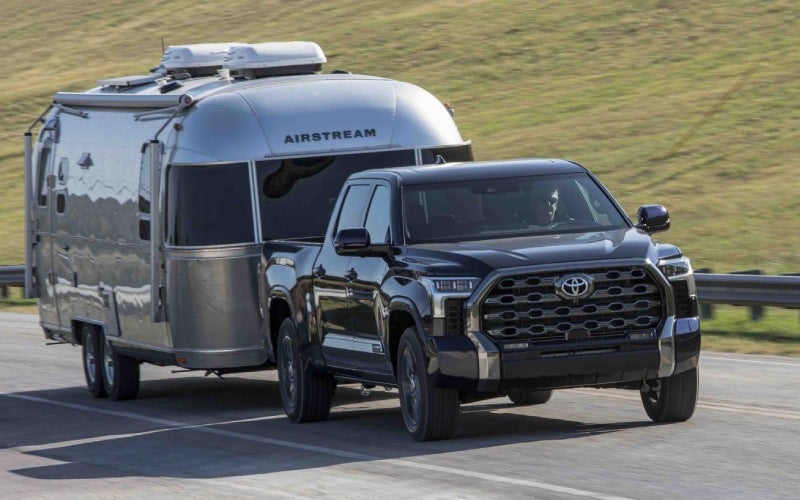
When you need a full-size truck that pulls with confidence and keeps the process stress-free, the 2026 Toyota Tundra stands out with thoughtful technology and stout engineering. This is a truck built to handle real work along US-401 and NC-87, then head down I-95 for weekend getaways without breaking a sweat. In this deep dive, we’ll focus on two things shoppers ask about most: Tundra’s towing capability and the smart tech that helps you control it with calm precision.

We see plenty of drivers who tow for a living or for fun—landscaping trailers, bass boats, campers—who want a better, simpler way to hook up and back up. Tundra’s design, powertrains, and available driver-assist features work together, so the process feels consistent whether you’re pulling through busy Fayetteville traffic, angling into a campsite under trees, or easing a trailer down a narrow driveway.

Power and Control That Feel Natural

Under the hood, Tundra gives you a choice of two remarkable powertrains. The available i-FORCE twin-turbo V6 produces strong, responsive power for daily hauling, while the available i-FORCE MAX hybrid adds electric motor assistance for even more low-end torque—precisely where you need it most to get a load moving. That instant torque is what makes hitching up on an incline or merging onto fast-moving highways feel composed and unhurried.

Beyond raw output, Tundra’s selectable TOW/HAUL modes help adjust throttle mapping and shift logic to match the job. The idea is simple: let the truck adapt to the load and terrain so you can focus on traffic, turns, and wind. With an Integrated Trailer Brake Controller in easy reach, you can dial in trailer braking behavior as conditions change, making descents and sudden slowdowns more predictable.

Smarter Hookups and Easier Backups

Toyota’s available Trailer Backup Guide with Straight Path Assist is a favorite for anyone who regularly backs into tight spots. Using cameras and sensors, the system can help you keep a trailer pointed right where you want it, even if space is limited or sightlines aren’t perfect. Pair it with the available Panoramic View Monitor (PVM), and you get a 360-degree perspective that makes it easier to check clearances, line up the hitch, and verify that ramps, curbs, or fences are where you expect.

All of this helpful info shows up clearly on the available 14-in. Toyota Audio Multimedia touchscreen and the available 12.3-in. digital gauge cluster. You can keep your hands on the wheel, eyes forward, and still see the visual cues and prompts you need. When the job involves early mornings or late evenings, available LED lighting, including bed illumination, helps you verify tie-downs and gear placement before you roll.

Confidence From the Frame Up

Tow rating only tell part of the story. Stability matters just as much. Tundra’s body-on-frame construction and multi-link rear suspension with coil springs are engineered to deliver a confident, controlled feel—especially with a trailer attached. That translates into less sway, less hobby-horsing on uneven pavement, and better directional stability when crosswinds pick up on I-95 between Lumberton and Fayetteville.

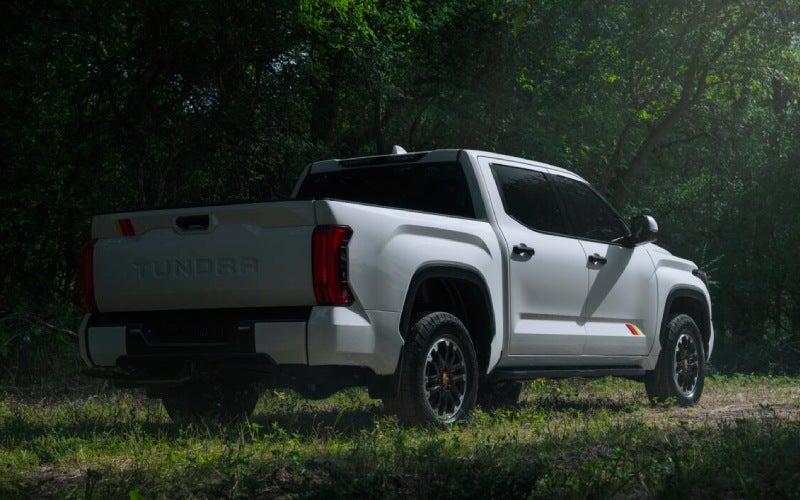
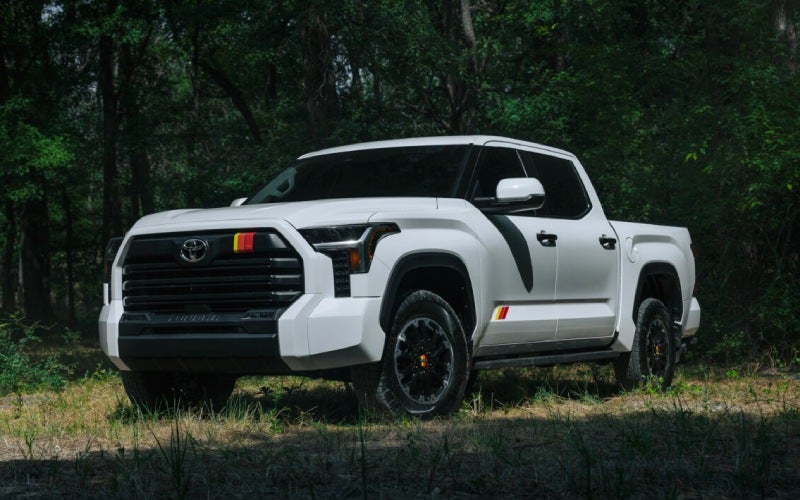
For drivers who take trailers to trailheads or job sites on unpaved access roads, the available TRD Off-Road Package adds capability and composure. The TRD Pro trim takes that mission even further with a TRD Pro off-road suspension featuring FOX® shocks and a 1.1-in. front lift, lending extra clearance and damping control when the ground gets rutted or washboarded.

Technology Highlights That Matter When You Tow

It’s easy to get lost in specs, but what makes Tundra shine is how its features help in real situations around Fayetteville. Here are standouts that consistently earn nods from owners:

  • Trailer Backup Guide with Straight Path Assist: Helps keep the trailer tracking where you aim it while reversing.
  • Panoramic View Monitor (PVM): Uses multiple cameras to provide a 360-degree exterior view for hitching and tight-spot maneuvers.
  • Selectable TOW/HAUL Modes: Optimizes performance for heavy loads, hills, and highway stretches.
  • Integrated Trailer Brake Controller: Lets you fine-tune trailer braking for smoother, more predictable stops.
  • Available 12.3-in. Digital Gauge Cluster: Centralizes towing data and safety info where you see it fastest.
  • Ultra-Durable Composite Bed: Resists dings, dents, and rust when you’re loading gear and tools day after day.

Each of these features reduces friction in some part of the towing process—lining up, backing up, tracking straight, or stopping steadily—so the whole experience feels more manageable and less stressful.

Everyday Usability, Not Just Weekend Capability

The best towing truck is also a great daily driver. Tundra’s cabin is quiet and comfortable, with available leather-trimmed seats and straightforward controls that don’t require a manual to figure out. The available 14-in. touchscreen brings your navigation, phone, and media into sharp focus, while large knobs and switches make quick work of climate adjustments when you’ve got gloves on. It’s a setup that works on family errands and site visits alike.

Safety is integral, too. Toyota Safety Sense™ 2.5 includes advanced features designed to help support awareness and assist in traffic. When you add PVM and Trailer Backup Guide with Straight Path Assist, it’s easy to understand why drivers who tow regularly feel noticeably more confident.

And because Fayetteville truck owners do a little of everything—commuting downtown, heading to the Cape Fear River, or pulling a trailer out to long-term job sites—Tundra’s balance of power, visibility, and comfort really hits the sweet spot. It’s a truck that feels at home on city streets and country roads, and that versatility pays off day after day.

Want to go deeper on how Tundra fits your needs? Peterson Toyota is here to help with side-by-side comparisons of configurations, powertrains, and towing tech to match your specific trailer and typical routes. Our team is serving Fayetteville, Hope Mills, and Maxton, and we’re happy to walk you through the features that can simplify your setup and your drive.

Frequently Asked Questions:

How much can the 2026 Toyota Tundra tow when properly equipped?

Tundra offers a max towing capacity of up to 12,000 lbs. when properly equipped, supported by selectable TOW/HAUL modes, an Integrated Trailer Brake Controller, and tech that simplifies backing and hitching.

Is the i-FORCE MAX hybrid better for towing than the gas i-FORCE engine?

Both are strong. The i-FORCE MAX hybrid adds electric motor assistance for instant low-end torque, which feels especially helpful when pulling heavy loads from a stop, climbing hills, or maneuvering at low speed.

Which features help most with backing a trailer in tight spaces?

The available Trailer Backup Guide with Straight Path Assist helps keep the trailer aligned as you reverse, while the available Panoramic View Monitor (PVM) provides camera views that show obstacles and hitch alignment.

What makes Tundra’s ride feel stable with a trailer attached?

The multi-link rear suspension with coil springs and a stout frame contributes to better ride control and reduced sway. That mechanical stability works hand in hand with TOW/HAUL tuning and trailer-brake adjustments.

Can I get off-road capability without sacrificing towing features?

Yes. The available TRD Off-Road Package and TRD Pro trim add off-road suspension tuning and hardware. You can still equip towing tech, giving you confidence both on rugged access roads and on the highway.
Request more 2026 Toyota Tundra information

Posted in:

Related Posts

Which truck offers the more confident everyday towing around Parkton, NC — the 2026 Toyota Tundra or the 2026 Ram 1500?

Which truck offers the more confident everyday towing around Parkton, NC — the 2026 Toyota Tundra or the 2026 Ram 1500?

Peterson Toyota - Which truck offers the more confident everyday towing around Parkton, NC — the 2026 Toyota Tundra or the 2026 Ram 1500? When shoppers around Parkton, NC start comparing full-size pickups, one of the first questions we hear is straightforward: Which truck feels more confident for everyday towing—the Toyota Tundra or the Ram 1500? It’s a great question, because confidence isn’t built on a single spec. It comes from torque right off idle, predictable braking with a trailer attached, clear camera views, and smart software that helps you reverse without the guesswork. Let’s break down how each truck stacks up for real-world towing—think small construction trailers, bass boats at the Lumber River, or a dual-axle utility trailer—so you can make an informed call. On raw output, Toyota sets a strong foundation with two robust powertrains. The standard i-FORCE twin-turbo V6 delivers 389 hp and 479 lb.-ft. of torque, while the i-FORCE MAX hybrid pairs a twin-turbo V6 with an electric motor to produce 437 hp and 583 lb.-ft. That torque figure matters when you’re pulling away from a stop with 5,000 to 8,000 lbs in tow or merging onto US-301 with a steady uphill grade. Ram 1500 counters with a deep bench: Hurricane engines that can crest 540 horsepower, the available HEMI V8, and the veteran Pentastar V6. Despite that headline horsepower, the Ram 1500’s maximum available towing checks in at 11,610 lbs, while Tundra reaches up to 12,000 lbs. The takeaway is simple: the Toyota’s hybrid torque and tow rating give you a little extra headroom when you need it. Towing Control You Can Feel Both trucks bring an Integrated Trailer Brake Controller and tow/haul programming to the table. The difference shows up in how the systems talk to each other. Toyota tuned Tundra’s steering, throttle, and transmission mapping to feel settled with a trailer attached, which you’ll notice at two common stress points—lane changes at highway speed and slow, angled driveways. Tundra’s multi-link rear suspension with coil springs helps the truck track straight, while available load-leveling rear air suspension maintains poise as tongue weight changes. Ram 1500’s coil-spring rear and available air suspension are also impressive, especially on broken pavement and gravel. Where Toyota pulls ahead is holistic integration: the way the cameras, braking, and steering work together when you’re setting up a trailer in a tight alley or backing toward a ramp. That synergy translates into fewer corrections and more trust in what the truck will do next. Camera Views and Guidance That Reduce Guesswork Towing confidence accelerates when you can see what’s happening. Tundra’s available Panoramic View Monitor stitches together a 360-degree perspective, and the Trailer Backup Guide With Straight Path Assist helps keep your trailer aligned while you reverse. For anyone who has had to make three passes at a narrow gate off a two-lane, these tools can be the difference between a quick drop and a twenty-minute hassle. Ram 1500 offers a 360 Surround View Camera and advanced trailering features as well, and they’re welcome additions if you move between multiple hitches and trailers throughout the week. Hookups made easier: Multiple camera angles and dynamic grid lines help you center the ball and coupler quickly. Backups with fewer corrections: Straight-line guidance supports smoother reversing even in tight spaces. Awareness all around: Overhead and side views assist with curbs, posts, and pedestrians near busy lots. Durability and Bed Utility Matter More Than You Think Confidence also comes from knowing your gear is protected. Toyota equips every Tundra with an aluminum-reinforced composite bed that resists dents, dings, and rust—no extra liner required. If your routine involves gravel, pavers, or pressure-treated lumber, the bed surface you touch all week should be built to take it. Ram’s rugged steel bed is stout but typically benefits from an added liner for long-term protection. Pickups spend as much time hauling as they do towing; choosing a truck that defends its bed day in and day out is a win for long-term ownership. For those who alternate between towing and loading, Tundra’s bed-length choices—5.5-, 6.5-, and an 8.1-ft option—let you tailor the truck to your mix of tasks. If you’re hauling ladders for roof work in the morning and hitching a camper in the afternoon, that flexibility keeps your to-do list moving without constant compromises. Everyday Scenarios Around Parkton, NC Think about a typical week: weekday commutes, a trailer full of landscaping tools, a Saturday morning run out to a local ramp, a quick supply pickup on the way home. With Tundra, the i-FORCE MAX hybrid’s low-speed torque shortens those moments when you most need confidence—pulling up a wet ramp or finding traction on a gravel shoulder. Its Trailer Backup Guide with Straight Path Assist helps when you’re wedged between a fence and a driveway. And Toyota Safety Sense™ 2.5 standardization offers driver-assist support on every trim, which is great if multiple drivers share the truck. Ram 1500’s technology and powertrain range are substantial, and if you’re chasing specialized performance or a particular trim vibe, you’ll find compelling options. But for the towing-focused, everyday confidence question, Tundra’s integrated approach—torque-rich hybrid, cohesive tow tuning, and bed durability—answers with fewer tradeoffs. Torque where it counts: Hybrid-assisted punch helps with heavy loads at low speed. Tow-friendly visibility: Clear camera views simplify hookups and keep you aligned. Durability built in: Composite bed resists dents and corrosion without extra accessories. To make selection easier, consider this quick process when comparing trims and packages for towing: List your heaviest regular trailer weight and add 10 percent for headroom. Match tow ratings and available axle ratios to that number across trims. Prioritize camera and backup-assist packages that fit your driveway and job-site realities. Choose a bed length that supports typical cargo without overhanging. Frequently Asked Questions: Does Tundra’s i-FORCE MAX hybrid actually improve towing feel at low speeds? Yes. The electric motor’s instant torque fills in right off idle, which smooths launches on inclines and helps maintain control during precise maneuvers, like easing a boat down a ramp or repositioning a utility trailer. Can both trucks help me reverse a trailer if I’m not experienced? Both offer trailer-assist features and 360-degree camera systems. Tundra’s Trailer Backup Guide with Straight Path Assist is particularly intuitive; it actively helps keep the trailer in line so you make fewer steering corrections. How important is bed material if I tow more than I haul? Even if towing is your priority, you’ll still load cargo often. A composite bed like Tundra’s reduces long-term wear, protects against rust, and helps avoid the cost and weight of an add-on liner—benefits that show up in daily use and when it’s time to trade. Ultimately, if your top question is about everyday towing confidence around Parkton, the Toyota recipe resonates: torque-rich hybrid power, towing tech that feels natural, and a bed that’s tough without extra steps. That combination makes the truck easier to live with Monday through Sunday. Peterson Toyota is proud to be serving Maxton, Elizabethtown, and Parkton with straightforward guidance on configuration and features, so you can choose once and tow with certainty. Request more 2026 Toyota Tundra information

Which truck has the smarter trailering tech for daily towing around Elizabethtown, NC – the Tundra Tundra or the Silverado 1500?

Which truck has the smarter trailering tech for daily towing around Elizabethtown, NC – the Toyota Tundra or the Silverado 1500?

Peterson Toyota - Which truck has the smarter trailering tech for daily towing around Elizabethtown, NC – the Toyota Tundra or the Silverado 1500? When truck shoppers compare full-size pickups, one question comes up again and again: which model packs the smarter trailering technology that reduces stress from driveway to highway? If you’re weighing Toyota’s latest control suite against Chevrolet’s camera-based aids, this deep dive focuses on the practical, everyday differences you’ll notice while hitching, backing, and cruising with a trailer near Elizabethtown, NC. Both trucks bring strong capability and thoughtful features to the table. Chevrolet has long offered helpful camera views, an In-Vehicle Trailering App, and driver-assist alerts aimed at towing confidence. Toyota, meanwhile, leans on a cohesive integration of cameras and driver assistance that’s designed to make every moment—from lining up a hitch to easing into a tight boat ramp—feel more intuitive. The goal here isn’t to drown you in acronyms; it’s to highlight where the systems feel simpler, clearer, and more repeatable when you’re moving real loads in real life. The big differentiator: automated trailer backing assistance The standout difference is Toyota’s available Trailer Backup Guide with Straight Path Assist. Using sensors and camera inputs, the system can actively help keep your trailer tracking straight while you reverse, reducing steering corrections and the classic “jackknife anxiety.” It’s a meaningful assist when you’re squeezing into a narrow driveway, backing a landscaping trailer into a worksite, or easing a boat down a ramp with a cross-breeze. Chevrolet offers excellent camera angles and on-screen guidelines, but its approach is guidance-only, not automated straight-path correction on the half-ton model. Camera clarity and user interface: seeing is believing Next, consider how quickly and clearly you can read the screen. Toyota’s available 14-in. Toyota Audio Multimedia touchscreen and available Panoramic View Monitor (PVM) elevate visibility, with crisp, easy-to-parse views that pair logically with on-screen prompts. Silverado counters with up to 14 available camera views, depending on configuration, which can be hugely helpful for situational awareness. The key question is whether you need that many angles every day, or whether a streamlined, bigger display with well-placed prompts is easier to live with during busy mornings and tight jobsite turnarounds. Everyday gains you’ll actually feel Hitching speed: A large, responsive screen and clear backup lines save time when you’re solo-hitching before sunrise. Backing precision: Automated Straight Path Assist helps you correct less and breathe more when space is limited. On-road confidence: Integrated camera prompts and towing menus reduce distraction and keep eyes forward on two-lane roads. Those are the moments—small but constant—where smarter tech leaves you less fatigued at the end of the day. Ride and control matter with a load Towing is about more than power. Suspension tuning and chassis composure determine how confident a truck feels when crosswinds pick up or the surface changes. Toyota’s Multi-Link Rear Suspension with coil springs emphasizes directional stability and ride comfort, which shines on broken pavement and undulating secondary roads. Chevrolet’s setup delivers solid control as well, and specific off-road trims add hardware aimed at rough terrain. If your towing life mixes highway stints with tight neighborhood turns and frequent backing, the calm, settled feel from coil springs can make the difference between “worked” and “worn out.” Power that helps, not just impresses Torque matters most with a trailer, particularly at low speeds and on grades. Toyota’s available i-FORCE MAX hybrid powertrain produces a big wave of low-end torque that makes launches and merges feel more confident, especially when you’re pulling onto fast-moving state highways. Chevrolet’s engine lineup, including an available 6.2L V8 and a 3.0L Duramax® Turbo-Diesel, delivers stout performance and proven durability. The choice comes down to the character you want: hybrid-boosted response for smooth, early torque versus traditional gas or diesel grunt. If you value seamless, muscular pull without the drama, hybrid assistance is a compelling advantage. How to choose your tech stack the smart way Prioritize the tough tasks: If reversing with a trailer makes your pulse jump, automated straight-path help should be high on your list. Screen size and clarity: Make sure the display is big and bright enough to read quickly in full sun and dusk glare. Integration over novelty: Choose systems that reduce steps and taps when you’re under time pressure. Frequently Asked Questions: Does automated Straight Path Assist work with different trailer sizes? It’s designed to assist with a range of common trailer types within weight and length limits; always confirm your trailer’s compatibility in the owner’s manual and follow on-screen guidance while reversing. Can camera-based systems replace mirrors and spotters? No. Cameras are aids, not replacements. Use proper mirrors, keep speeds low while maneuvering, and enlist a spotter in unfamiliar or crowded spaces. What if I tow only a few times a year? That’s when intuitive systems pay off most. If trailering isn’t routine, tools that simplify backing and improve visibility reduce the re-learning curve every time you hitch up. Local perspective and next steps Around Bladen Lakes and the two-lanes outside town, you’ll likely deal with crosswinds, rolling pavement, and tight boat launches. That’s exactly where the combination of a large, clean display, cohesive camera integration, and automated straight-path assistance feels like extra hands when you need them most. If you regularly rotate between a utility trailer, a small camper, and a boat, choosing a setup with straightforward menus and consistent prompts will save time and mental energy every single weekend. We’re proud of how Toyota integrates towing tech to reduce hassle and boost confidence for Carolina drivers, and we’re equally committed to helping you test the systems in real scenarios—hitching, backing to cones, and practicing the maneuvers you use most. With one visit, you can see what feels more natural in your hands and on your schedule. For a convenient shopping experience serving Hope Mills, Maxton, and Elizabethtown, talk with a product specialist who tows, camps, or boats the way you do; the right conversation makes choosing the right tech simple. If you want a truck that turns trailering from a chore into a routine, Toyota’s approach deserves a serious look. When you’re ready to compare these trailering tools side by side on local roads and ramps, schedule a hands-on demo drive with Peterson Toyota. Bring your questions—and if possible, your trailer measurements—so we can tailor the walkthrough to your real-world needs. Request more 2026 Toyota Tundra information

Why the 2026 Toyota Tundra's Trailer Backup Guide With Straight Path Assist Helps Everyday Hauls Around Maxton, NC

Why the 2026 Toyota Tundra's Trailer Backup Guide With Straight Path Assist Helps Everyday Hauls Around Maxton, NC

Peterson Toyota - Why the 2026 Toyota Tundra's Trailer Backup Guide With Straight Path Assist Helps Everyday Hauls Around Maxton, NC If backing up with a trailer has ever had you doing the steering wheel shuffle while someone waves frantic hand signals behind you, the 2026 Toyota Tundra’s available Trailer Backup Guide With Straight Path Assist feels like a breath of fresh air. This camera- and sensor-based system helps you keep a trailer pointed straight while reversing, reducing the second-guessing that can come with tight driveways, narrow streets, or boat ramps. Around Maxton, NC, where a quick trip to a worksite might involve backing into a slim alley or lining up a utility trailer at a storage unit, that precision makes a real difference. In the Tundra, trailer confidence does not end with reversing. The truck’s available Panoramic View Monitor delivers a 360-degree perspective, stitching together camera views around the body to help you see obstacles, curbs, and posts you might otherwise miss. Paired with the available 12.3-in. digital gauge cluster and an available 14-in. With the Toyota Audio Multimedia touchscreen, you get large, clear visuals that help you stay in control. Add in the choice between the i-FORCE twin-turbo V6 and the i-FORCE MAX hybrid, and you have power to match that visibility—quick acceleration for merging, strong torque for hauling, and smooth response that helps keep a trailer settled. How the Technology Works to Your Advantage Trailer Backup Guide With Straight Path Assist uses the Tundra’s cameras and sensors to monitor the angle relationship between truck and trailer. As you reverse, it helps you stay on a straight line, cutting down on the zig-zag that makes simple tasks feel complicated. The result is more precise control with less stress, even if you are new to towing. Confidence: The system helps you hold a straight line as you back up, so everyday maneuvers feel calm and controlled. Clarity: With the available Panoramic View Monitor, you get a comprehensive look around the truck and trailer to spot curbs, posts, or pedestrians. Convenience: Large displays—up to an available 14 in.—make guidance and surroundings easy to read at a glance. Compatibility: Paired with TOW/HAUL modes and an Integrated Trailer Brake Controller on select grades, your setup feels tailored for real work. When the day’s demands shift—from hauling landscaping equipment to moving ATVs—these tools keep you ready. You will notice it most in close quarters, like storage bays or neighborhood streets with cars parked along both sides. Less back-and-forth means you spend more time getting the job done and less time repositioning. Tundra Power That Backs You Up The Tundra’s powertrains are built to handle heavy lifting. The i-FORCE twin-turbo V6 brings robust output for quick response, while the i-FORCE MAX hybrid pairs that engine with an electric motor for even more torque-rich acceleration. With a max towing capacity of up to 12,000 lbs. when properly equipped, you can plan bigger projects or weekend plans with confidence. That power shows up where it counts—merging onto US 74 with a trailer, getting up to speed on a short on-ramp, or pulling a loaded boat out of a wet, uneven launch. Select TOW/HAUL modes: Tailor throttle and shifting to the weight you are pulling. Leverage the cameras: Use the available Panoramic View Monitor to verify clearances before moving. Rely on the guide: Let Trailer Backup Guide With Straight Path Assist help you hold your line while reversing. Set your brakes: Use the Integrated Trailer Brake Controller on select grades to tune braking to your trailer. It all works together to make towing feel less like a chore and more like a capability you can trust every time. Comfort, Organization, and Control Inside Long hauls should not feel long. The Tundra’s available leather-trimmed seats, spacious second row, and thoughtfully placed storage help keep the cabin comfortable and organized. The available 12.3-in. digital gauge cluster can bring towing and safety data front and center, while the available 14-in. Toyota Audio Multimedia touchscreen provides a crisp, user-friendly hub for navigation, audio, and camera views. A quiet cabin and supportive seating cut fatigue, so you arrive ready to work or relax—whether you are crossing Robeson County or hopping between errands around Maxton. Beyond towing, the truck’s aluminum-reinforced composite bed is a difference-maker. It is designed to resist dings, impacts, and rust, and it comes in three lengths—5.5-, 6.5-, or 8.1-foot—so you can match the bed to your daily needs. Tie-down points are widely spaced for easy strapping, and the cleanable bed surface helps you tidy up after muddy equipment or sandy gear. For off-roaders, the TRD family brings hardware and swagger. The TRD Rally Package adds heritage-inspired tri-color exterior stripes, while TRD Pro enhances trail control with FOX® shocks, 1.1-in. front lift, and available 18-in. BBS® forged-aluminum wheels wrapped in Falken® WILDPEAK All-Terrain tires. It is a setup that is as serious about the dunes as it is about daily driving. Looking for a quick test of how user-friendly the Tundra feels? Back a utility trailer down a narrow lane, then step into a tight parking space with the help of the available Panoramic View Monitor. The combination of camera tech, powertrains, and suspension tuning brings together the clarity and control that make a demanding day feel efficient. Who This Truck Fits in Maxton Whether you haul lawn equipment, handle weekend home projects, or tow a boat to a favorite launch, the Tundra’s technology and capability meet you where you are. Around Maxton, NC, maneuverability in town is as important as stability on open stretches, and the Tundra’s engineering balances both. From coil-spring Multi-Link Rear Suspension comfort to torque that gets you confidently up to speed, this is a tool you can count on. Ready to explore trims and options? Peterson Toyota is here to help you compare configurations and choose the features that match your routine, from bed lengths to camera systems to available powertrains. We are serving Hope Mills, Maxton, and Elizabethtown with a friendly, straightforward process that keeps the focus on your needs. Frequently Asked Questions: What does Trailer Backup Guide With Straight Path Assist actually do? It uses the Tundra’s cameras and sensors to help you maintain a straight path while reversing with a trailer, reducing steering corrections and making tricky maneuvers easier. Is the Panoramic View Monitor helpful if I do not tow? Yes. The 360-degree view is great for tight parking, curbs, and low obstacles you might miss with mirrors alone, whether you have a trailer or not. Which Tundra powertrain is best for towing? Both are capable, but the i-FORCE MAX hybrid delivers higher torque, which many drivers prefer for towing and low-speed control. Can I get off-road upgrades without going full TRD Pro? Yes. The available TRD Off-Road Package adds trail-focused enhancements, while the TRD Rally Package adds distinctive exterior style inspired by Toyota’s Baja heritage. Does Toyota Safety Sense™ 2.5 come on every Tundra? Toyota Safety Sense™ 2.5 is standard across the Tundra lineup, bringing advanced active safety features designed to support driver awareness. What bed length should I choose? If you regularly haul longer materials, the 6.5- or 8.1-foot bed is ideal; for a balance of maneuverability and capacity, many drivers pick the 5.5-foot bed. How does the Tundra feel on long drives? The coil-spring Multi-Link Rear Suspension targets ride comfort and stability, and the cabin’s available seating and technology reduce fatigue over long distances. Request more 2026 Toyota Tundra information